- UnifiedEnclosed Track Rail
- Workstation Cranes
- Jib Cranes
- Gantry Cranes
- Fall Protection Systems
- Automation

Call us today at (800) 728-0818
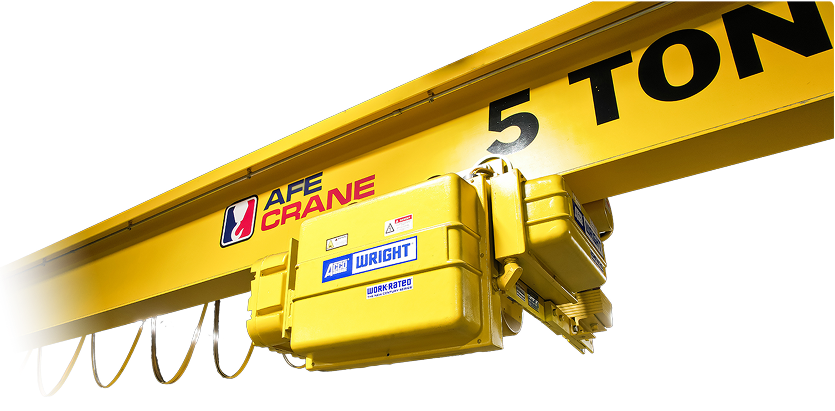
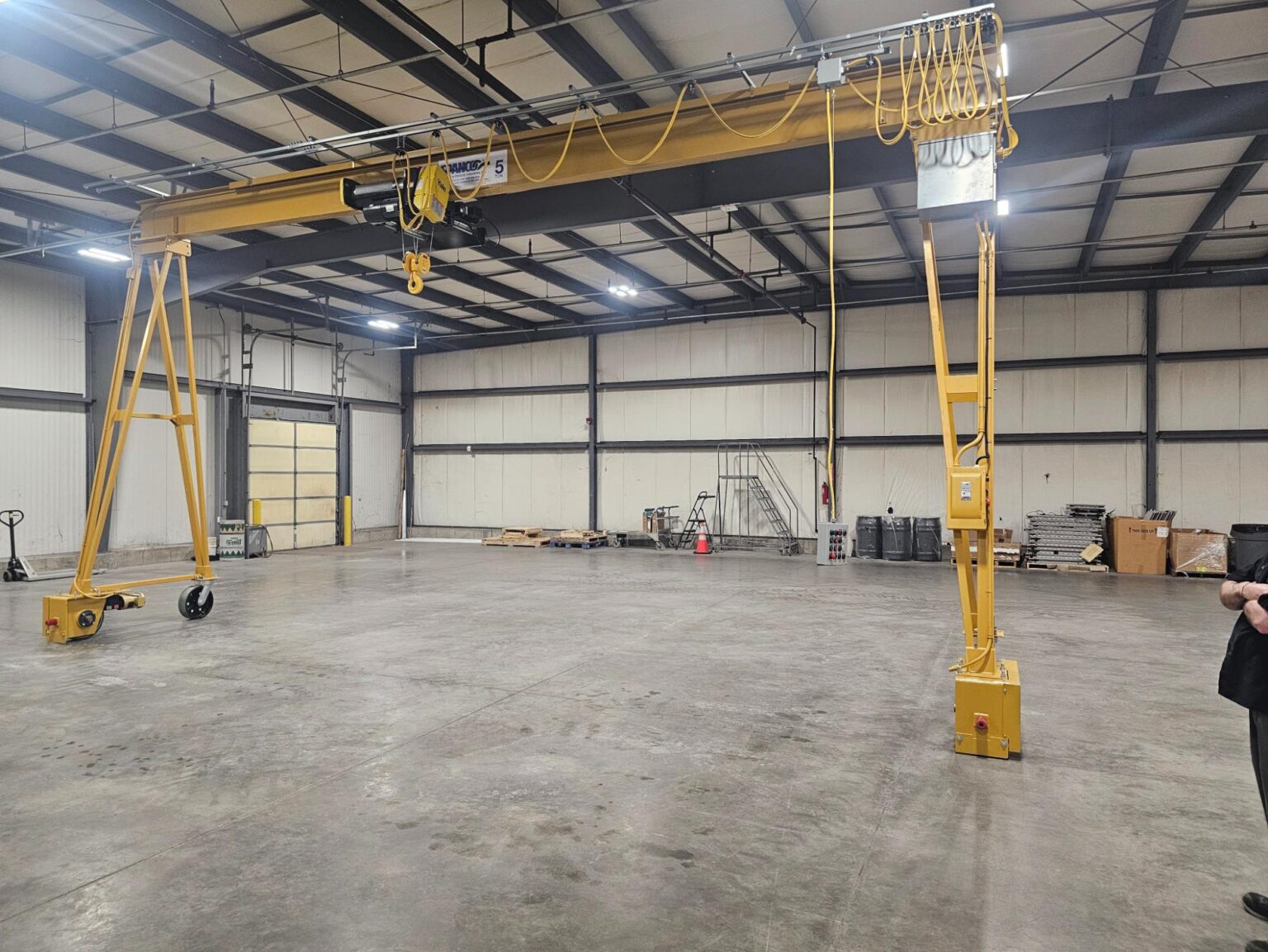
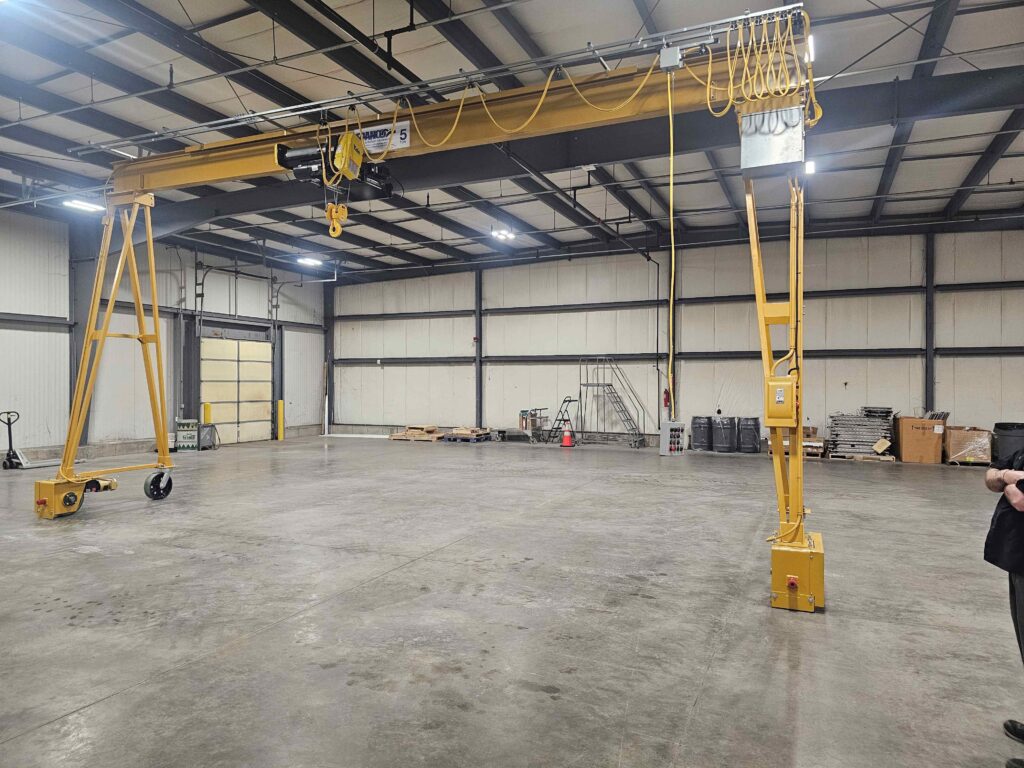
A gantry crane is a self-supporting, top-running overhead lifting system featuring single or double bridge girders mounted on vertical legs that operate independently of building support structures. Configured as either fixed-leg systems running on floor-embedded rails or single-leg (semi-gantry) designs paired with an overhead runway beam, industrial gantry cranes support safe working loads up to 15 tons, spans up to 55 feet, and height clearances up to 30 feet.
A gantry crane is a top-running crane system—either single or double girder—that uses end trucks supported by legs running at floor level. These cranes can be fixed leg or single leg (semi-gantry) designs. Fixed leg cranes operate on rails embedded in the floor, while single leg cranes combine a floor-mounted end truck with one that runs along an overhead runway beam. Gantry cranes typically span up to 55 feet, have a lifting capacity up to 15 tons, and stand at heights of 30 feet or less.
Gantry cranes provide overhead material handling without requiring the crane system to be fully supported by the building structure. Depending on the application, gantry cranes can be configured as portable, fixed-leg, or semi-gantry systems.
Portable gantry cranes are well suited for applications where the lifting area may change. Typically mounted on casters, these systems can be moved between work areas and may be designed for disassembly, relocation, and storage when not in use.
Fixed-leg gantry cranes use two structural leg assemblies with end trucks that travel on floor-mounted rails. This configuration provides a defined travel path and is well suited for permanent applications requiring consistent coverage of a production or material handling area.
Semi-gantry cranes, also called single-leg gantry cranes, combine a floor-supported leg and end truck on one side with an elevated runway beam on the opposite side. This configuration can provide many of the benefits of a traditional overhead bridge crane while reducing the amount of building-supported runway structure required.
AFE Crane designs and integrates gantry crane systems around the required capacity, span, height, travel, duty cycle, operating environment, and workflow of the application. Our capabilities include application engineering, custom crane design, component integration, fabrication, and installation support. Systems can be configured for indoor or outdoor use and customized for applications ranging from light-duty material handling to demanding industrial production.
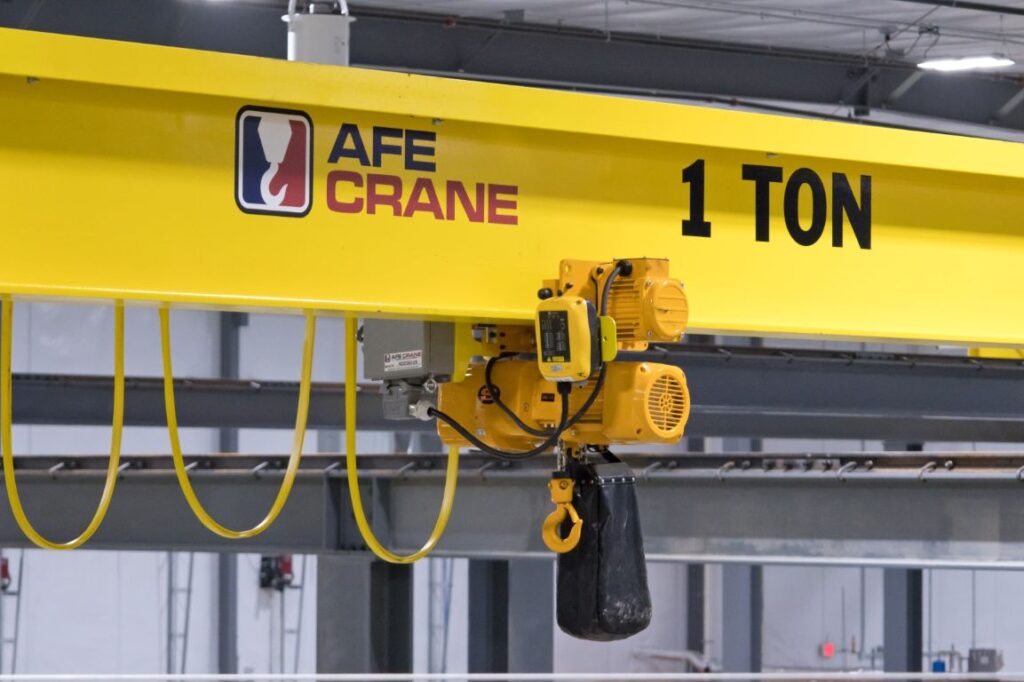
Industrial gantry cranes can be configured around the load, operating environment, required coverage area, and frequency of use. AFE Crane can customize the crane structure, travel system, hoist and trolley, controls, electrification, and other components to meet the requirements of the application.
Choose between a fixed-height gantry for consistent operation or an adjustable-height system when the crane must accommodate changing lifting requirements, doorway clearances, equipment heights, or work areas.
Gantry crane spans can be designed around a defined work area or, on certain systems, configured with an adjustable span to accommodate changing workspaces and load-handling requirements.
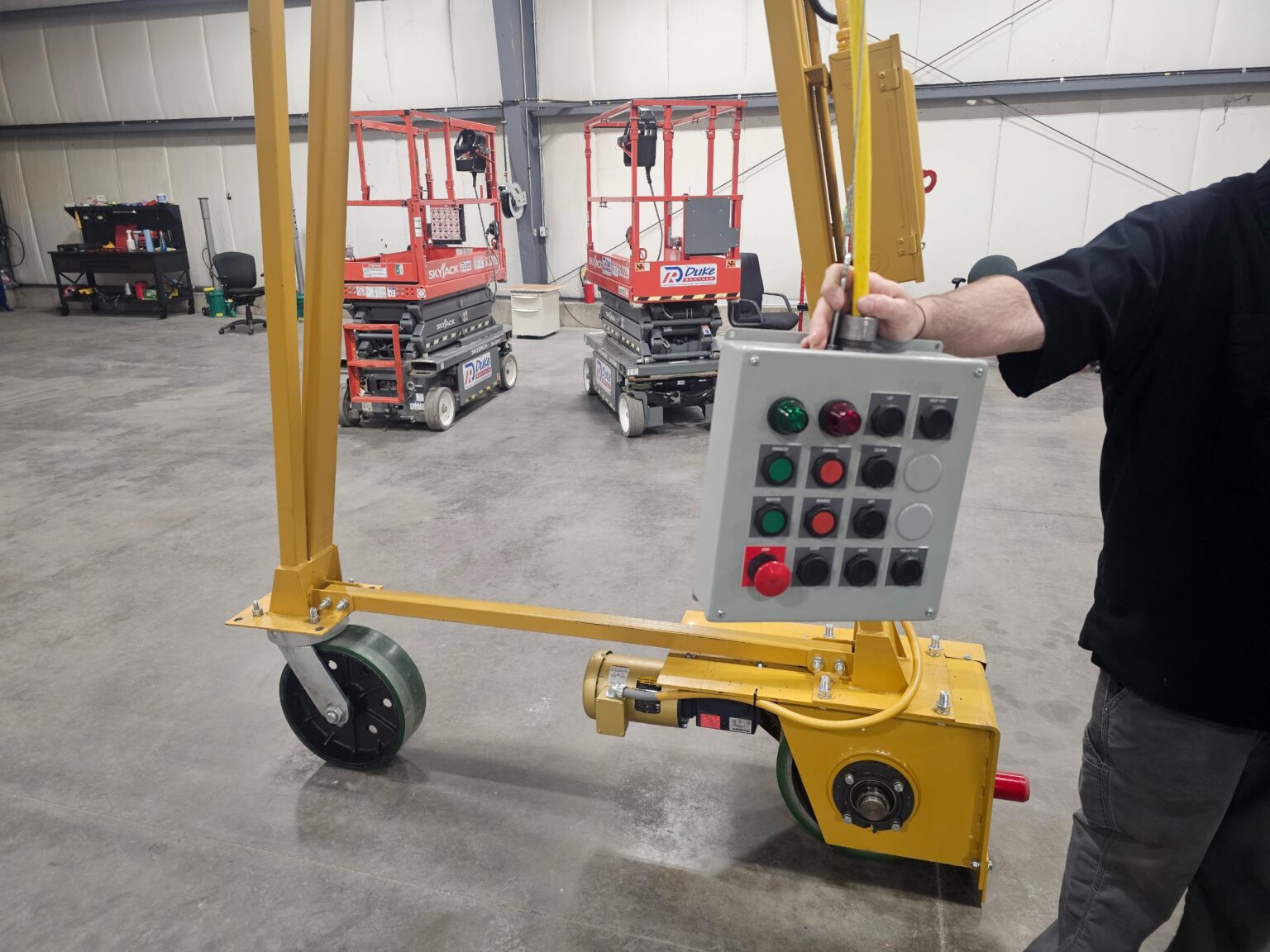
Manual gantry travel is practical for lighter-duty applications, while motorized end trucks improve efficiency and load positioning for larger systems. Variable frequency drives (VFDs) can provide smoother acceleration, deceleration, and travel control.
Depending on the application, gantry cranes may use polyurethane casters, steel wheels, or V-groove steel wheels. Wheel selection is based on factors such as crane capacity, floor conditions, required mobility, travel path, and whether the crane operates freely or along a defined track.
Gantry systems can be designed with two floor-supported legs or as a semi-gantry configuration with one floor-supported leg and one side supported by an elevated runway. The appropriate configuration depends on the facility structure, available floor space, travel requirements, and required coverage area.
Fixed gantry cranes can travel along floor-mounted or embedded rails to provide a defined and repeatable travel path. Track and rail configurations can be designed around the required crane travel, floor conditions, wheel type, and operating environment.
Gantry cranes can incorporate wired pendant or radio remote controls, with electrification options such as festoon systems or conductor bar. Controls and power delivery can be configured around crane travel, operating environment, and application requirements.
For outdoor, washdown, marine, chemical, or other demanding environments, gantry cranes can incorporate weather-resistant finishes and specialty coating systems to help protect structural and mechanical components.
If you don’t see the customization you’re looking for, AFE Crane can design a solution to fit your specific needs. Contact us to discuss your requirements.
AFE utilizes a large comprehensive supply chain for materials and parts in addition to establishing long term relationships with our parts vendors. This relationship helps us to expedite parts so that your equipment can be repaired quickly.


This file category has no files to display


The rapid growth of the data center industry has increased demand for modular fabrication methods that accelerate construction schedules while maintaining quality and consistency. As
Introduction OSHA 1910.179 is the primary federal regulation governing overhead and gantry cranes in general industry. Manufacturers, plant managers, engineers, and safety professionals rely on
A gantry crane is a freestanding overhead lifting system that supports its bridge on legs rather than relying entirely on a building structure. Depending on the design, gantry cranes can travel on casters or floor-mounted rails and can be configured as portable, fixed-leg, or semi-gantry systems.
Gantry cranes provide flexible overhead lifting without requiring a fully building-supported runway system. Depending on the configuration, they can provide portability, indoor or outdoor operation, customizable spans and heights, and an effective lifting solution for facilities where a traditional overhead bridge crane may not be practical.
An overhead bridge crane typically travels on elevated runways supported by the building or a freestanding runway structure. A gantry crane supports its bridge with legs that travel on the floor, rails, or casters. Gantry cranes are often selected when building support is unavailable, portability is required, or the application benefits from a floor-supported crane system.
Gantry crane requirements vary based on the crane design and application. AFE Crane designs gantry crane systems around applicable OSHA requirements, ASME standards, and CMAA specifications to help ensure the equipment is appropriate for its intended use, capacity, and duty cycle.