Introduction
OSHA 1910.179 is a key federal regulation governing overhead and gantry cranes in general industry. Manufacturers, plant managers, engineers, and safety professionals rely on this standard to understand crane safety requirements, reduce workplace hazards, and maintain compliant lifting operations.
The regulation establishes requirements for crane design, rated load markings, inspections, testing, maintenance, and safe operation. Understanding these requirements helps facilities identify potential hazards, address equipment deficiencies, and maintain reliable overhead lifting systems.
This practical guide explains OSHA 1910.179 overhead crane requirements, including inspection frequencies, safety devices, load testing, and maintenance responsibilities.
For the full regulatory text, review the official OSHA 1910.179 Standard.
What OSHA 1910.179 Covers for Overhead Cranes
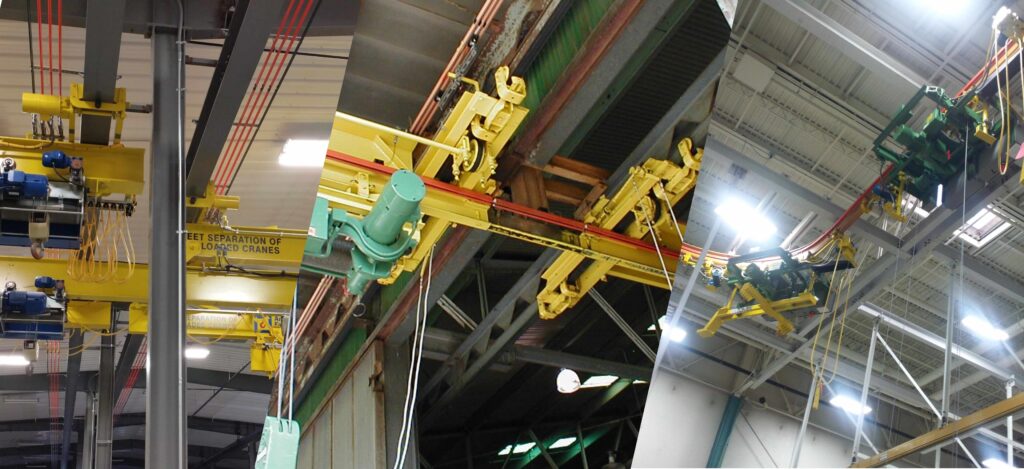
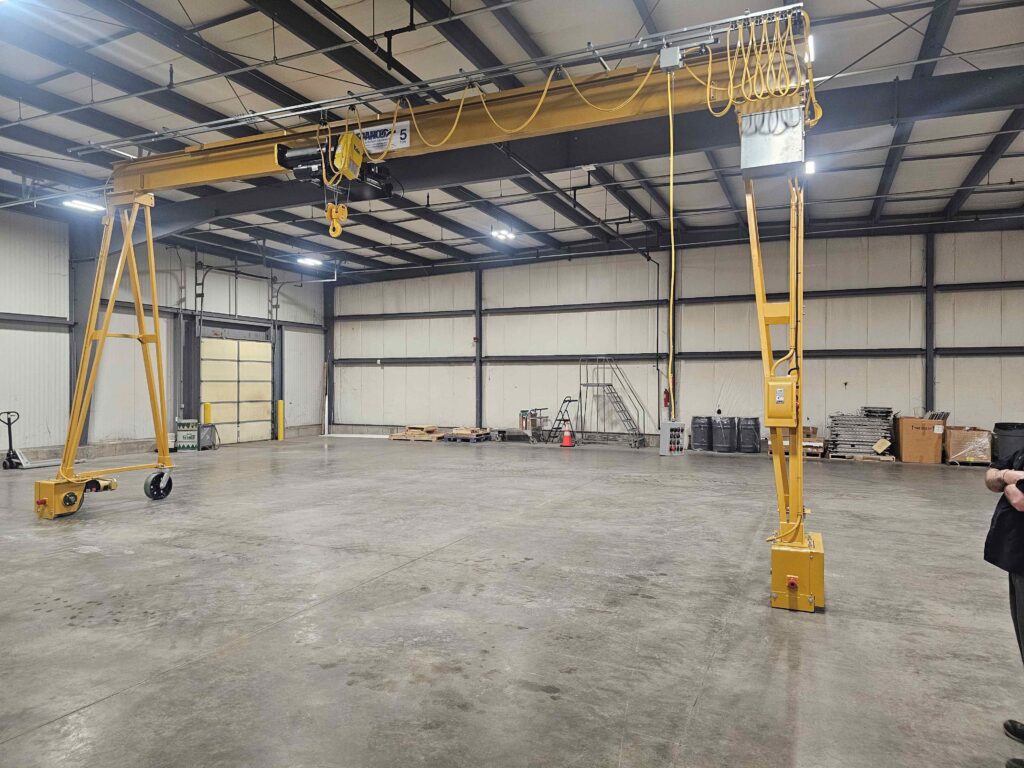
OSHA 1910.179 applies to overhead and gantry cranes in general industry, including semi-gantry cranes, cantilever gantry cranes, wall cranes, storage bridge cranes, and other cranes with similar operating characteristics.
Under the standard, a crane is defined as a machine that lifts and lowers a load while also moving it horizontally, with the hoisting mechanism functioning as an integral part of the equipment.
However, not all overhead lifting equipment falls under the same regulatory provisions. Underhung bridge cranes, monorails, workstation cranes, and certain hoist configurations may be subject to different applicable OSHA requirements and industry standards.
Facilities should evaluate their specific equipment configuration to determine which requirements apply. OSHA 1910.179 serves as an important compliance reference for covered overhead and gantry crane systems, but it should not be treated as the only standard relevant to every overhead lifting application.
OSHA 1910.179 Rated Load Marking Requirements
One of the most visible OSHA 1910.179 requirements involves rated load markings.
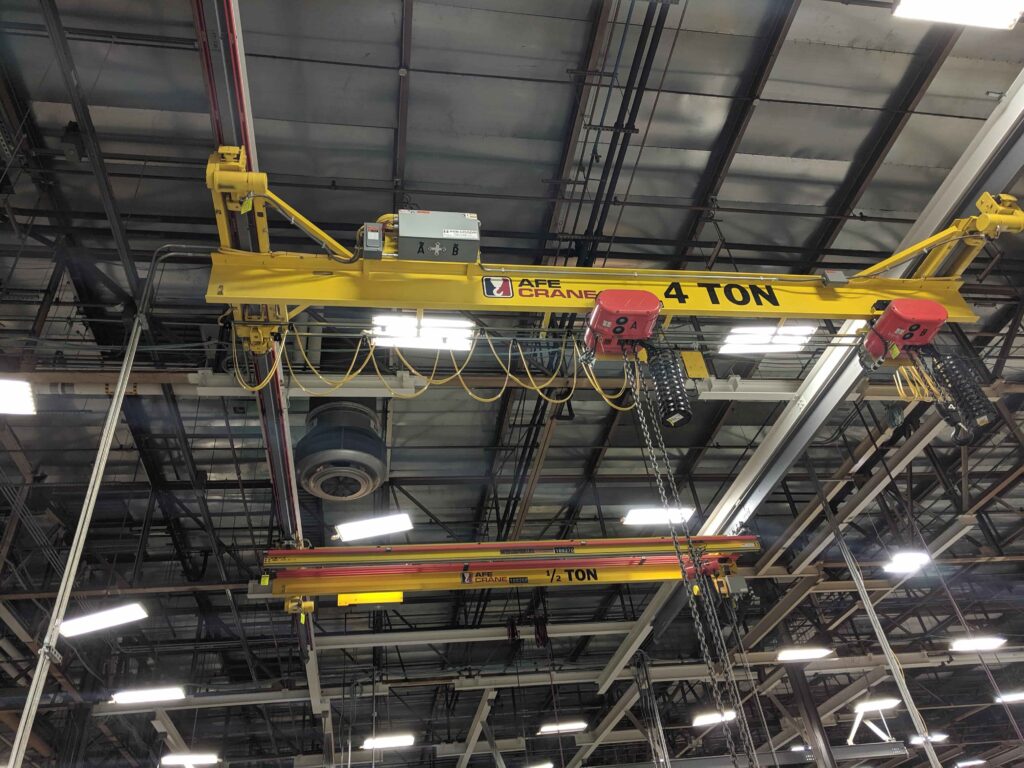
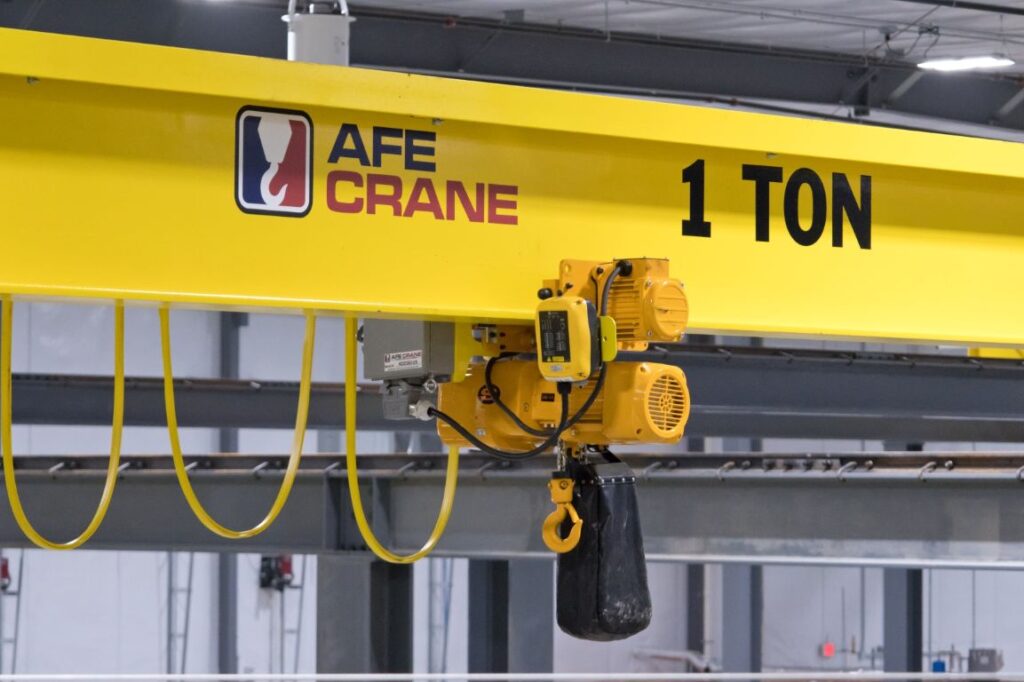
Under 1910.179(b)(5), the crane’s rated load must be plainly marked on each side of the crane. If the crane has multiple hoisting units, each hoist must also display its rated capacity on the hoist or load block, with markings clearly legible from the ground or floor.
These markings help operators and supervisors identify the equipment’s rated lifting capacity and avoid overloading.
Facilities should periodically verify that capacity markings remain accurate, legible, and consistent with the equipment’s approved configuration.
When a crane is modified and re-rated, OSHA requires the crane and supporting structure to be thoroughly checked for the new rated load by a qualified engineer or the equipment manufacturer. The crane must also be tested as required, and the new rated load must be displayed.
OSHA 1910.179 Design and Structural Requirements
OSHA 1910.179 incorporates specific historical consensus standards for crane design, including ANSI B30.2.0-1967 and certain CMAA requirements.
Modern crane systems are commonly engineered using applicable current CMAA specifications, ASME standards, and manufacturer requirements. However, newer editions of these standards should not automatically be interpreted as replacing the editions specifically incorporated into OSHA regulations.
When modifying or re-rating a crane, engineering evaluation is essential to determine whether the existing equipment and supporting structure can accommodate the proposed changes.
Depending on the modification, this evaluation may include bridge girders, end trucks, hoists, brakes, runway structures, and other load-bearing components.
Changes in lifting capacity, equipment configuration, or operating requirements can affect the loads transferred through the crane and into the supporting structure.
Without proper evaluation, facilities risk overstressing crane components or introducing conditions that affect equipment safety and reliability.
For additional design guidance, review the Crane Manufacturers Association of America (CMAA) specifications.
OSHA 1910.179 Safety Devices and Operational Controls
OSHA 1910.179 establishes requirements for crane safety devices, operating controls, and protective equipment.
Depending on the crane configuration, these requirements address components such as:
- Hoist holding brakes and control braking systems
- Hoist upper-limit devices
- Bridge and trolley stops and bumpers
- Guards for exposed moving parts
- Electrical conductors and control equipment
- Warning devices where required
These components help control crane movement, protect equipment, and reduce hazards associated with overhead lifting operations.
For example, OSHA requires pendant control boxes to be clearly marked for identification of their functions. The standard also establishes requirements for electrical protection, braking systems, and limit devices.
Warning labels and operating instructions may be required by other applicable standards or equipment manufacturers. Facilities should verify these requirements for their specific equipment rather than assuming every label requirement originates directly from OSHA 1910.179.
Routine inspection and functional verification of safety devices are important parts of maintaining safe crane operation.
Additionally, OSHA 1910.179(b)(8) limits operation of covered cranes to designated personnel. Employers should ensure operators understand the equipment, operating limitations, applicable safety procedures, and responsibilities associated with their assigned duties.
For additional information about operator and maintenance support, see Training & Support: AFE Crane’s Ongoing Assistance for Your Team.
OSHA 1910.179 Inspection and Maintenance Requirements
Inspection and maintenance are essential components of OSHA 1910.179 overhead crane compliance.
The regulation establishes inspection requirements intended to identify wear, damage, deterioration, malfunctioning components, and other conditions that could affect safe operation.
Inspection requirements vary depending on the equipment, the components being evaluated, the severity of service, and the operating environment.
Understanding OSHA Crane Inspection Frequencies
OSHA 1910.179(j) identifies several inspection classifications.
| Inspection Type | OSHA Inspection Interval | General Purpose |
|---|---|---|
| Initial Inspection | Before initial use of new or altered cranes | Verify compliance with applicable requirements before operation |
| Frequent Inspection | Daily to monthly | Identify operating problems, damage, wear, and developing deficiencies |
| Periodic Inspection | Every 1–12 months | Perform a more comprehensive evaluation of crane components and condition |
| Crane Idle 1–6 Months | Before returning to service | Complete applicable frequent inspection and rope inspection requirements |
| Crane Idle Over 6 Months | Before returning to service | Complete applicable frequent, periodic, and rope |
These intervals are general classifications. OSHA specifies additional inspection frequencies and requirements for individual components.
For example, functional operating mechanisms must be checked daily for maladjustment affecting proper operation. Hooks and hoist chains require daily visual inspections and monthly inspections with specified certification records.
Periodic inspections are more comprehensive and may include structural members, fasteners, sheaves, drums, brakes, mechanical components, and electrical equipment.
The appropriate periodic inspection interval depends on crane activity, service severity, operating environment, and other applicable requirements.
An annual inspection alone does not satisfy every OSHA inspection requirement. Facilities must also address applicable daily, monthly, frequent, periodic, and special inspection requirements.
Inspection Documentation and Recordkeeping
Inspection documentation helps maintenance teams monitor equipment condition, identify recurring problems, and track corrective actions.
OSHA 1910.179 specifically requires certain inspection and testing records, including monthly certification records for hooks and hoist chains, applicable rope inspection records, and rated load test reports.
These requirements should be distinguished from broader maintenance documentation practices.
Although OSHA does not require the same type of written report for every inspection activity, maintaining organized inspection reports, maintenance records, and repair documentation is a practical way to support equipment management and demonstrate that identified issues have been addressed.
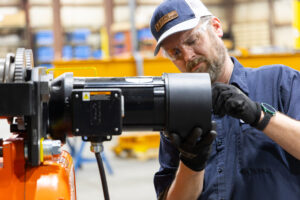
For additional information about professional crane inspections, read Overhead Crane Inspection: What Facilities Need to Know.
What Happens When an Inspection Identifies a Deficiency?
Identifying a deficiency is only the first step in maintaining safe overhead lifting equipment.
When an inspection reveals worn components, damaged equipment, malfunctioning controls, or other potential hazards, the findings should be evaluated to determine the appropriate corrective action.
Under OSHA 1910.179(l)(3), unsafe conditions identified through required inspections must be corrected before crane operation resumes.
Depending on the condition and severity of the findings, corrective action may involve component adjustments, repairs, replacement parts, additional engineering evaluation, or equipment modernization.
Facilities should establish a process for documenting deficiencies, determining whether equipment must be removed from service, coordinating repairs, and verifying that corrective work has been completed.
OSHA also establishes precautions for crane maintenance and repair activities, including securing equipment against unintended operation and ensuring safety devices and guards are restored before returning the crane to service.
A documented corrective-action process helps maintenance teams manage outstanding deficiencies and reduce the likelihood of unresolved problems affecting future operations.
OSHA 1910.179 Load Testing Requirements
OSHA 1910.179 establishes testing requirements for new and altered cranes.
Under paragraph (k)(1), new and altered cranes must undergo operational testing before initial use. Applicable testing includes hoisting and lowering, trolley travel, bridge travel, and the operation of limit switches, locking devices, and safety devices.
Operational testing should be distinguished from rated load testing.
Under paragraph (k)(2), rated load test loads must not exceed 125% of the crane’s rated capacity unless otherwise recommended by the manufacturer.
This provision establishes a test-load limit; it should not be interpreted as a universal requirement to test every crane at exactly 125% of rated capacity.
Rated load testing requirements should be evaluated based on the equipment, applicable OSHA provisions, manufacturer instructions, and the nature of any modifications or repairs.
For example, OSHA 1910.179(b)(3) specifically requires rated load testing when a crane is modified and re-rated.
Rated load test reports must be maintained where they are readily available to appointed personnel.
Testing should be planned and performed by appropriately qualified personnel using procedures suitable for the equipment and application.
Clearance and Safe Operating Conditions Under OSHA 1910.179
OSHA 1910.179 establishes clearance and operating requirements intended to reduce collisions, equipment damage, and hazards to personnel.
Under paragraph (b)(6), the standard specifies minimum clearances of 3 inches overhead and 2 inches laterally between cranes and obstructions, in accordance with the incorporated CMAA specification.
Additional clearance requirements may apply based on the crane configuration, equipment design, and operating environment.
Facilities should evaluate runway alignment, bridge and trolley travel paths, nearby structures, and other equipment that could interfere with crane movement.
Safe operation also requires attention to load handling practices.
Operators should avoid side pulling unless specifically permitted by a responsible person who has determined that crane stability and component stresses will not be adversely affected.
Sudden acceleration, abrupt braking, and improper load handling can introduce unnecessary stresses and increase the risk of uncontrolled load movement.
Maintaining proper clearances and following established operating procedures helps protect personnel and equipment.
Why Partnering With a Crane Expert Strengthens OSHA Compliance
OSHA regulations are not the only requirements and guidance relevant to overhead lifting equipment.
While OSHA 1910.179 addresses covered overhead and gantry cranes, additional OSHA provisions, ASME B30 standards, CMAA specifications, and manufacturer instructions may apply depending on the equipment configuration.
For example, underhung bridge cranes, monorails, workstation cranes, and certain hoist systems may require evaluation under different applicable standards than conventional top-running bridge cranes.
These standards address equipment design, inspection, maintenance, testing, and operating practices for different types of lifting equipment.
Not every industry consensus standard is independently enforceable as an OSHA requirement. However, applicable standards and manufacturer instructions provide important technical guidance for evaluating crane safety and equipment condition.
AFE Crane designs, manufactures, installs, inspects, maintains, and repairs overhead lifting equipment with consideration for applicable OSHA requirements, relevant industry standards, and manufacturer recommendations.
Our engineering and service teams work with customers to evaluate equipment configurations, identify deficiencies, and determine practical solutions for maintaining or improving existing lifting systems.
A comprehensive approach helps facilities address both regulatory responsibilities and the operating requirements of their equipment.
Download the OSHA 1910.179 Compliance Checklist
Understanding OSHA requirements is an important part of maintaining a safe overhead lifting operation.
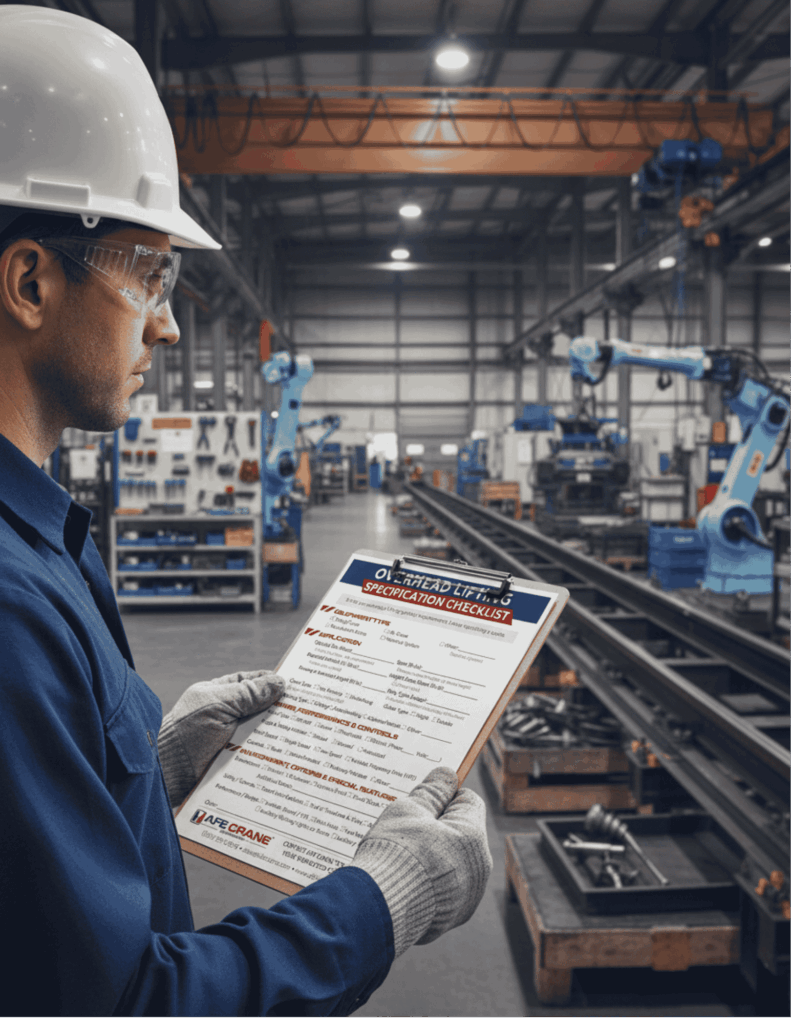
AFE Crane has developed an Overhead Crane Compliance Checklist to help maintenance teams, engineers, and safety professionals review important crane safety and compliance considerations.
The checklist provides a practical starting point for evaluating:
- Rated load markings and equipment documentation
- Inspection and maintenance practices
- Controls and safety devices
- Potential deficiencies requiring further evaluation
This resource is intended to support internal review and does not replace required inspections or a complete evaluation of applicable safety standards.
Download the OSHA 1910.179 Overhead Crane Compliance Checklist →
Need Assistance with Crane Inspections?
Maintaining an effective inspection and maintenance program requires more than identifying potential problems. Facilities must also evaluate findings, address deficiencies, and maintain equipment in suitable operating condition.
AFE Crane provides overhead crane inspections, maintenance, repairs, and modernization services to help facilities evaluate equipment condition and address service needs.
Whether you need assistance with periodic inspections, identified deficiencies, or evaluating an aging crane system, our team can help determine a practical next step.
Contact AFE Crane to discuss your overhead crane inspection and maintenance requirements.
Conclusion
OSHA 1910.179 remains an important foundation for overhead crane safety in general industry.
Understanding its requirements for rated load markings, safety devices, inspections, testing, maintenance, and operating practices helps facilities identify potential hazards and maintain equipment in suitable operating condition.
Effective crane safety programs also require attention to equipment condition, inspection documentation, corrective maintenance, and the standards applicable to each lifting system.
By combining regular inspections with appropriate maintenance and engineering support, facilities can better manage equipment reliability, address developing problems, and support safer overhead lifting operations.
For organizations seeking additional assistance, AFE Crane’s engineering and service teams can help evaluate existing crane systems, identify maintenance needs, and recommend practical solutions.
About the Author

Emily Carrier is the Applications Engineering Manager at AFE Crane. She holds a Bachelor of Science in Mechanical Engineering from Iowa State University and brings over 15 years of manufacturing experience. Emily works closely with customers to develop practical, engineered overhead lifting solutions that improve safety, efficiency, and long-term equipment performance. Connect with Emily on LinkedIn.