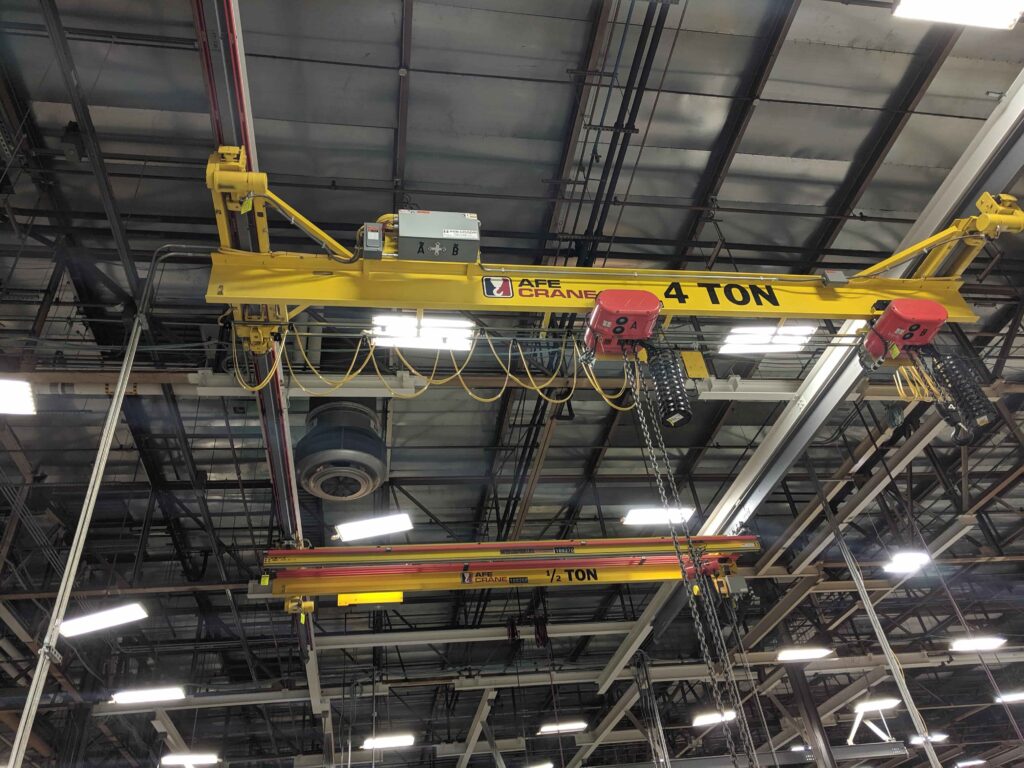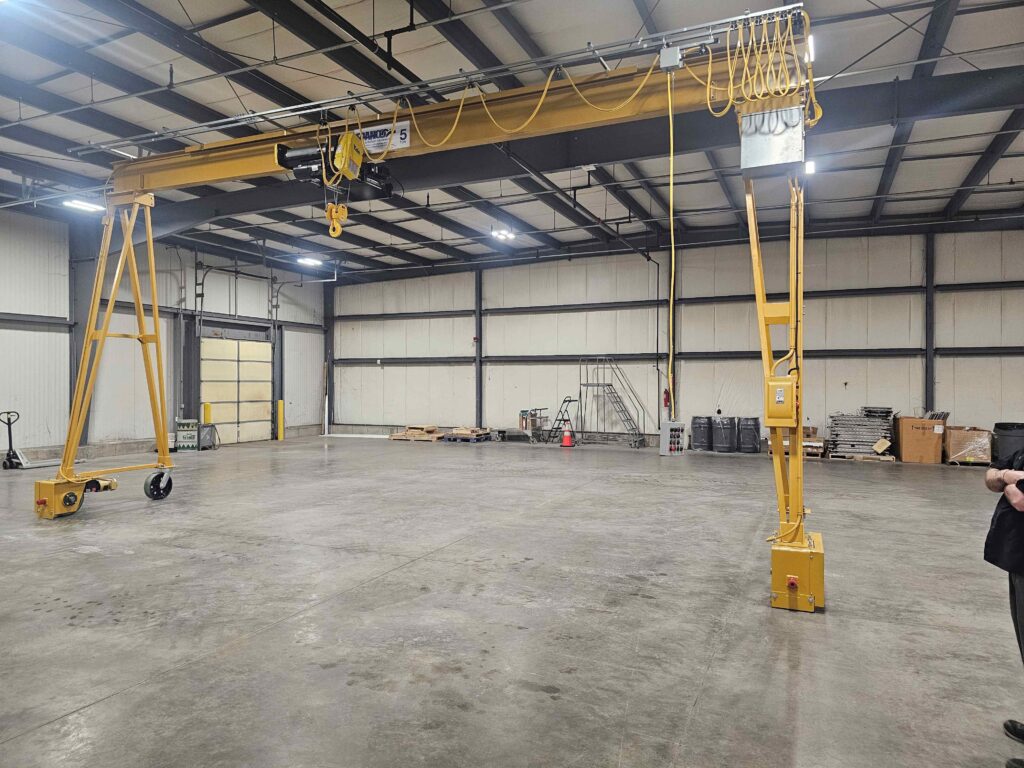
A standard overhead bridge crane provides effective hook coverage within a defined work area. However, manufacturing facilities do not always have simple layouts. Building columns, adjacent bays, process equipment, walls, existing crane systems, and other obstructions can create areas that a conventional bridge crane cannot easily reach.
When standard overhead crane coverage is not enough, the solution may require a different approach to how the load moves through the facility. Telescoping bridge cranes, interlock transfer cranes, and custom specialty crane systems can extend coverage, connect separate work areas, or accommodate unusual material handling requirements.
When Standard Overhead Crane Coverage Isn’t Enough
Before selecting a crane, it is important to define the required load path.
Where does the load start? Where does it need to go? What areas must the hook reach? What building features or equipment prevent a conventional bridge crane from providing that coverage?
A traditional bridge crane travels along parallel runway rails while the hoist moves across the bridge. This provides coverage within the boundaries of the crane and runway system. When the required load path extends beyond those boundaries, additional engineering may be necessary.
The right solution depends on why the standard coverage envelope does not work. A load that needs to reach beyond the end of a runway presents a different challenge than a load that needs to move between separate crane systems.
Telescoping Bridge Cranes
Extending Hook Coverage
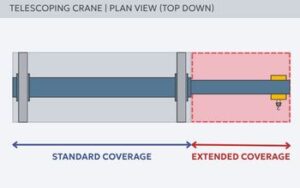
A telescoping bridge crane, sometimes called a projecting bridge crane, is an underhung crane with a secondary bridge section that extends beyond the end of the main bridge. The projecting section allows the hoist to reach outside the normal limits of the runway system and retract when needed.
This configuration can be useful when the hook needs to reach into an adjacent bay, beyond the normal runway limits, around structural columns, or into another area that a conventional bridge cannot access.
Telescoping cranes typically project in one direction, although systems can also be designed to project in both directions. AFE Crane offers underhung single-girder and double-girder configurations.
Controls are another important part of the design. Depending on the application, telescoping systems can incorporate limit switches, travel restrictions, sequencing, and collision-avoidance technology. These features can help manage crane movement around columns, equipment, and other obstructions.
Learn more about AFE Crane telescoping bridge cranes
Interlock Transfer Cranes
Connecting Separate Coverage Areas
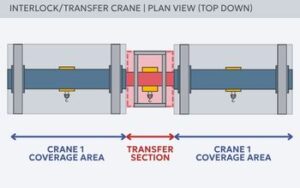
Sometimes the challenge is not reaching beyond a runway. Instead, the load needs to move between separate crane systems or work areas.
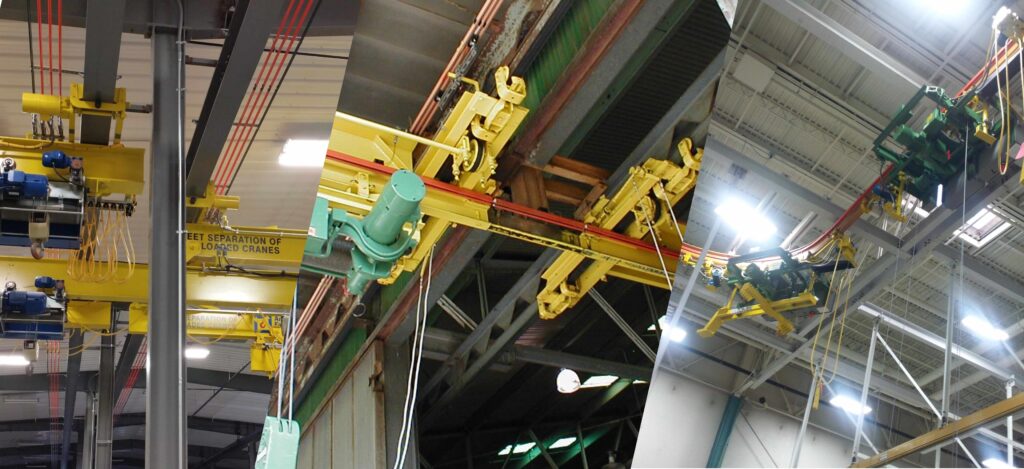
An interlock transfer crane system creates a transfer point between compatible crane or track systems. When the systems are properly positioned and interlocked, the hoist can travel from one system to another. This allows material to move between connected crane coverage areas without transferring the load to a separate lifting device.
Interlock systems can incorporate multiple bridge cranes, monorail sections, or dedicated transfer sections depending on the required material path. The latching mechanism can also vary with the application. AFE Crane identifies hand-operated and motor-operated latching options, along with PLC-based controls for applications requiring more advanced operation.
The important distinction is that an interlock system does not simply extend the bridge farther. Instead, it creates a controlled connection between separate lifting systems so the hoist can transfer between them.
This makes an interlock system useful when a process requires material to move through multiple coverage zones rather than remain within a single crane bay.
Learn more about AFE Crane interlock transfer cranes
Specialty Crane Systems
for Complex Coverage Requirements
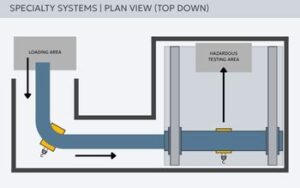
Not every material handling problem fits a standard crane configuration.
A facility may have an unusual footprint, multiple lifting points, restricted travel areas, specialized processes, environmental requirements, or equipment that affects how a crane can move. In these situations, a custom bridge or specialty crane system may be required.
Instead of trying to make a standard crane fit a difficult application, the crane configuration can be engineered around the required load path and production process.
Depending on the requirements, specialty crane systems can incorporate features such as dual or multiple hoists, twin lift points, specialized hoist configurations, collision avoidance, warning or status lights, custom controls, and restricted travel zones. AFE Crane also designs specialty systems for demanding operating environments, including hazardous, corrosive, outdoor, and high-temperature applications.
The objective is not to add complexity unnecessarily. Customization should address a defined operational requirement that a conventional crane cannot adequately solve.
Explore AFE Crane custom bridge and specialty cranes
How to Choose the Right Overhead Crane Coverage Option
The best starting point is the material path—not the crane type.
If the primary problem is reaching outside the normal runway envelope, a telescoping bridge crane may provide the additional hook coverage needed.
If the load needs to move between separate bridge cranes, monorails, or compatible track systems, an interlock transfer system may provide a connection between those coverage areas.
If the application involves unusual geometry, specialized lifting points, restricted areas, environmental conditions, or complex controls, a custom specialty crane may be necessary.
Capacity is only one part of the evaluation. Span, available headroom, hook approach, duty cycle, building structure, load dimensions, required speeds, obstructions, controls, and future production requirements can all influence the final crane configuration.
Start With the Required Load Path
Complex crane applications become easier to evaluate when the required load movement is defined first.
Instead of starting with “What type of crane do we need?” start with a more practical set of questions: Where does the load need to go? Where does the hook need to reach? What prevents a conventional crane from getting it there?
Once those requirements are understood, the equipment and controls can be evaluated around the actual production process.
A telescoping crane may extend the hook beyond a conventional runway. An interlock system may connect otherwise separate coverage areas. A specialty crane may address a combination of space, process, environmental, or control requirements.
The appropriate solution depends on the facility, application, and load path it needs to support.
Contact AFE Crane
If a standard overhead bridge crane cannot provide the hook coverage or material path your application requires, AFE Crane can help evaluate the available options.
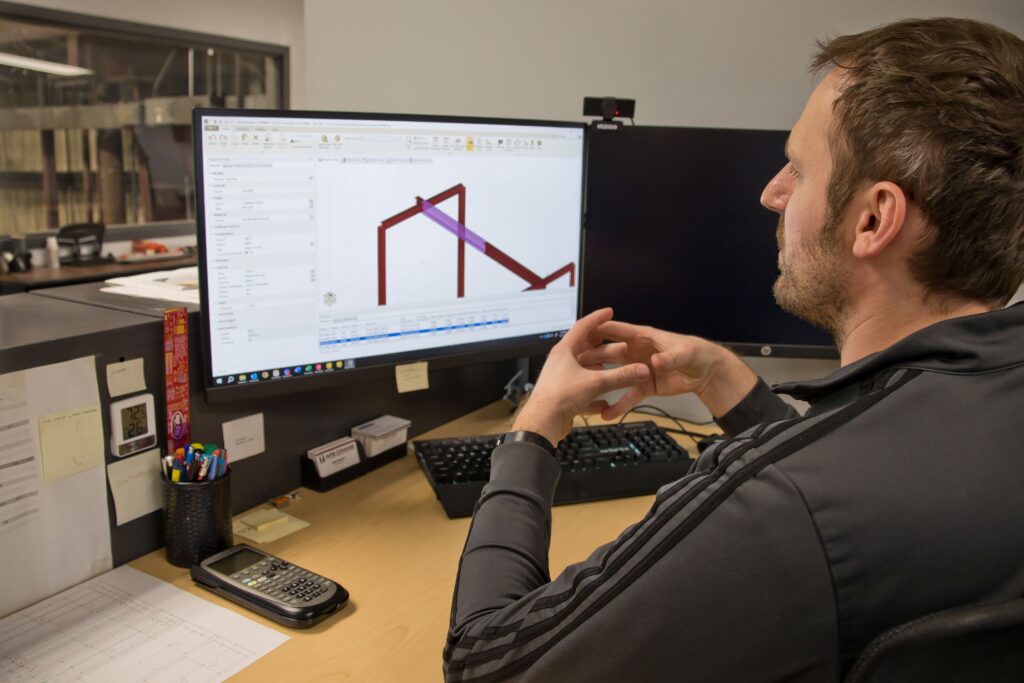
Our applications engineering team can review your facility layout, lifting requirements, obstructions, required hook coverage, and material flow to help determine whether a telescoping, interlock transfer, or custom specialty crane system is appropriate.
Contact AFE Crane to discuss your overhead crane coverage requirements.
About the Author
 Emily Carrier is the Applications Engineering Manager at AFE Crane. With a background in overhead lifting applications, she works with manufacturers to evaluate lifting requirements and develop practical solutions for crane systems, controls, and specialized material handling applications.