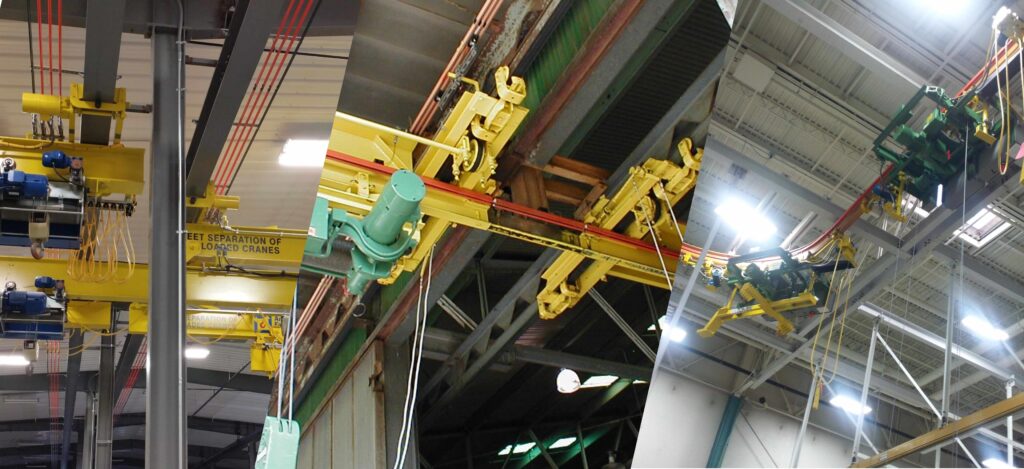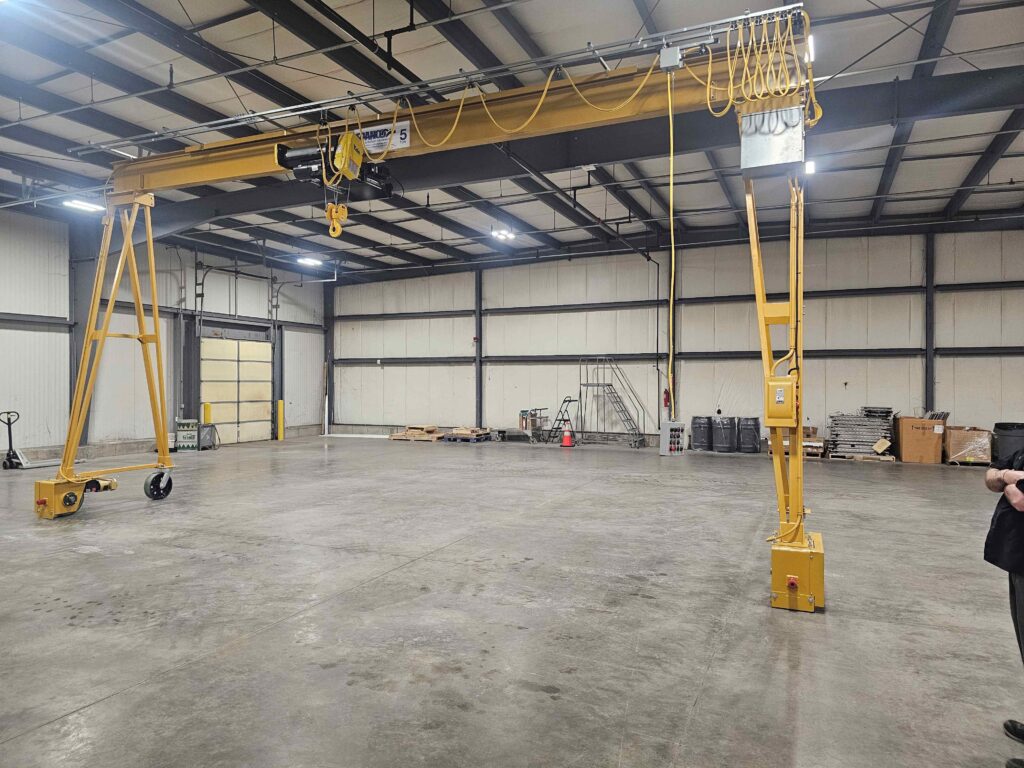
A/B/Both radio controls can simplify tandem lifting when an operator needs to coordinate two hoists or two separate bridge cranes. Instead of relying on separate transmitters and operators, the control system can allow one operator to select each piece of equipment individually or command both together from a single transmitter.
For existing crane systems, an A/B/Both radio control retrofit can improve how operators position and coordinate equipment during tandem lifts without necessarily replacing the entire crane system.
How Do A/B/Both Radio Controls Work?
An A/B/Both radio control uses a selector to determine which equipment responds to commands from the transmitter. Depending on the application, the system can control two hoists on the same bridge or two separate bridge cranes.
The basic operating modes are:
- A: Commands are sent to Hoist or Crane A.
- B: Commands are sent to Hoist or Crane B.
- Both (A+B): Commands are sent to both selected hoists or cranes.
For example, Magnetek Flex EX2 radio remote controls can support selector configurations for applications that require control of multiple pieces of equipment. The exact control arrangement depends on the crane system and its existing electrical controls.
Controlling Two Hoists on One Bridge
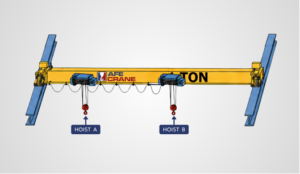
One common application involves a bridge crane equipped with two hoists. The operator may need to use each hoist independently for normal lifting but use both when handling a longer or more complex load.
With an A/B/Both configuration, the operator can select Hoist A and position it as needed. The operator can then switch to Hoist B and position the second hook. Once both hooks are properly positioned, the operator can select Both to command the two hoists together.
This provides more flexibility than a control system that requires both hoists to operate together at all times. It also allows one radio transmitter to support both independent and tandem operation.
Controlling Two Bridge Cranes in Tandem
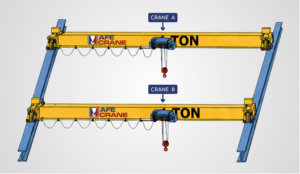
A similar concept can apply when two separate bridge cranes work together to handle one load. Long loads or equipment may require lifting points that a single crane cannot provide.
In this application, the operator can select Crane A or Crane B to position each crane independently. Once both cranes are properly positioned for the lift, the operator can select the tandem mode to send commands to both crane systems.
This can simplify an operation that might otherwise require two radio transmitters and two operators coordinating their movements. One operator can manage the lift from a single transmitter and maintain a consistent view of the load and surrounding work area.
However, tandem control involves more than installing a different transmitter. The radio receivers, crane control circuits, operating speeds, electrical configuration, and existing equipment must all work together correctly.
Does A/B/Both Control Keep Two Hoists or Cranes Synchronized?
Not necessarily.
Selecting Both means the control system sends the applicable commands to both pieces of equipment. It does not automatically mean two hoists or bridge cranes will travel at exactly the same speed or remain perfectly synchronized.
Differences in motor performance, drive settings, loading, wheel condition, mechanical components, and other system characteristics can affect how equipment moves. The required level of synchronization therefore needs to be considered during the engineering review.
Some applications may only require coordinated operator control. Others may require additional control technology when maintaining position between two lifting points is critical.
This distinction is important when evaluating whether an A/B/Both radio retrofit is appropriate for a tandem lifting application.
Why Upgrade an Existing Radio Control System?
A crane does not always need to be replaced when production requirements change. Updating the controls can sometimes add capabilities to an existing lifting system while retaining much of the original equipment.
An A/B/Both radio control retrofit may make sense when a facility needs to improve an existing tandem lifting process. It can also help when operators currently use separate transmitters to coordinate two hoists or cranes.
For the right application, the upgrade can provide a more practical way to select, position, and operate multiple pieces of lifting equipment.
What Should Be Evaluated Before an A/B/Both Retrofit?
AFE Crane starts by reviewing the existing crane system and understanding how the customer intends to use the equipment. The goal is not simply to replace a transmitter. The complete control system needs to support the required operating sequence.
The evaluation may include the existing radio system, receivers, control panels, contactors or variable frequency drives, operating speeds, and available control functions. The team also needs to understand whether the application involves two hoists on one bridge or two independent bridge cranes.
The lifting process itself is equally important. Load characteristics, lifting points, required motions, operator position, and the desired level of coordination all affect the appropriate control strategy.
After reviewing these factors, AFE Crane can determine whether an A/B/Both radio system is practical or whether the application requires additional controls.
Modernizing Crane Controls Without Replacing the Entire System
Radio control technology is one part of a broader overhead crane modernization strategy. Existing cranes may still have useful mechanical and structural life even when their controls no longer meet current production needs.
Updating radio controls can add new operating capabilities while retaining suitable existing equipment. Other modernization projects may incorporate variable frequency drives, anti-collision systems, updated control panels, warning devices, or other controls based on the application.
The right approach depends on the condition of the existing crane and the operational problem the facility needs to solve.
Is A/B/Both Control Right for Your Tandem Lifting Application?
A/B/Both radio controls can provide a practical way to manage two hoists or bridge cranes from a single transmitter. However, every tandem lifting application has different equipment, loads, operating requirements, and control needs.
Before modifying an existing system, the crane controls and lifting process should be evaluated together. This helps determine what equipment can remain, what needs to change, and what level of coordinated control the application requires. Learn more about Crane System Controls here.
Contact AFE Crane
If your facility currently uses two hoists or bridge cranes for tandem lifting, AFE Crane can evaluate the existing equipment and control system. Our team can help determine whether an A/B/Both radio control retrofit or another modernization approach is appropriate for the application.
Contact AFE Crane to discuss radio control and modernization options for your existing overhead lifting system.
About the Author
 Emily Carrier is the Applications Engineering Manager at AFE Crane. With a background in overhead lifting applications, she works with manufacturers to evaluate lifting requirements and develop practical solutions for crane systems, controls, and modernization projects.