Why Overhead Bridge Crane Selection Matters
Selecting the right overhead bridge crane is not just about choosing equipment—it directly impacts production efficiency, safety, and long-term reliability. While many systems appear similar on paper, engineering decisions directly shape real-world performance.
In many cases, teams run into problems because they do not fully define how the crane will be used or how it will integrate into the facility. As a result, understanding the differences between configurations—and when to use each—helps avoid rework, delays, and performance issues.
🎧 Prefer to listen? Hear how AFE Crane’s engineering team approaches these decisions:
Overhead Bridge Crane Selection Configurations and Options
Overhead bridge cranes can be configured in several ways depending on the application. As a result, these choices affect capacity, coverage, and how the system integrates into the building.
Single Girder vs. Double Girder
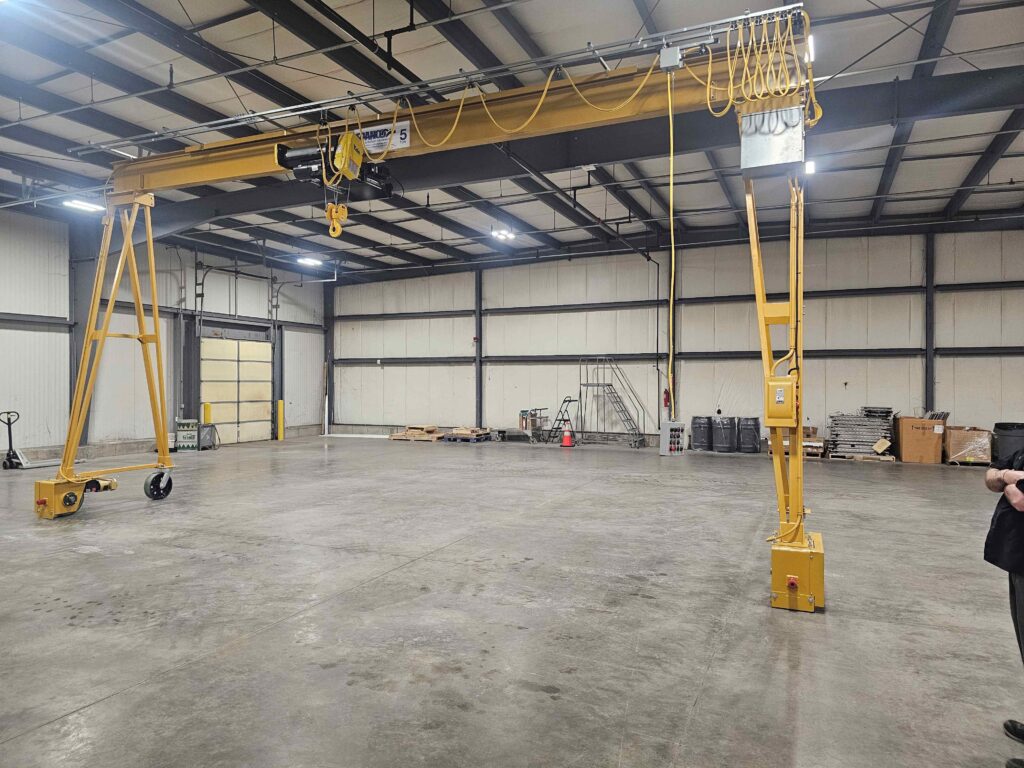
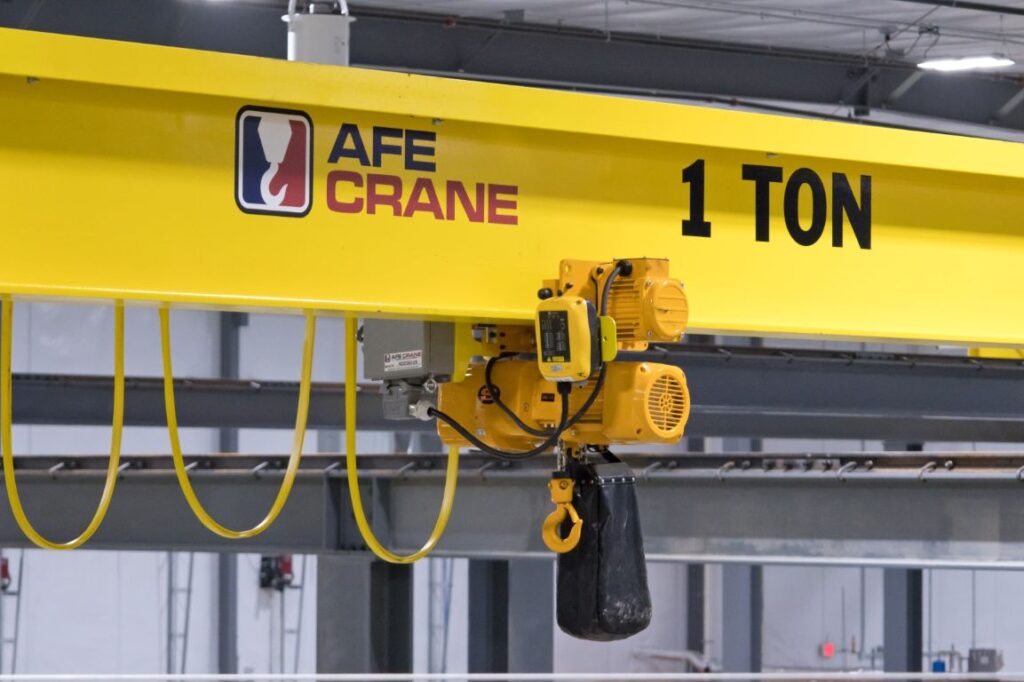
Single girder cranes are typically used for lighter capacities and shorter spans. They offer a cost-effective solution and perform well in many applications.
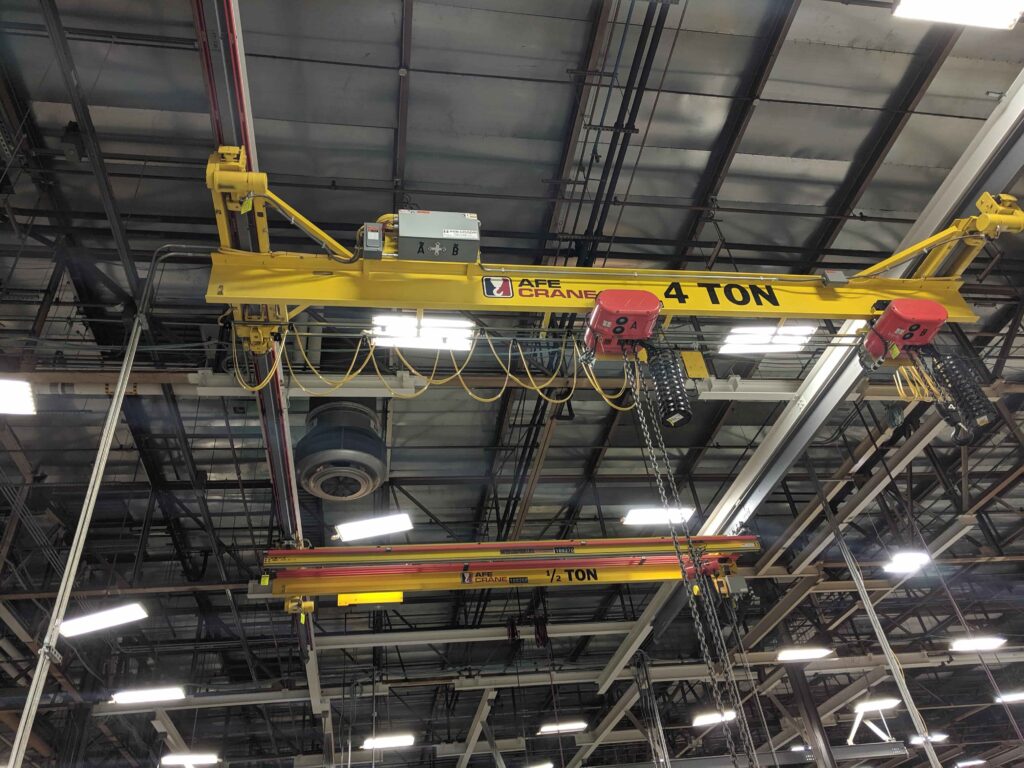
Double girder cranes support higher capacities, longer spans, and increased hook height. In addition, they allow for greater customization, including advanced controls, maintenance access, and auxiliary equipment.
Top Running vs. Underhung
Top running cranes travel on rails mounted on top of runway beams and are commonly used for higher-capacity systems. When the building structure supports the loads, they provide greater lifting capability.
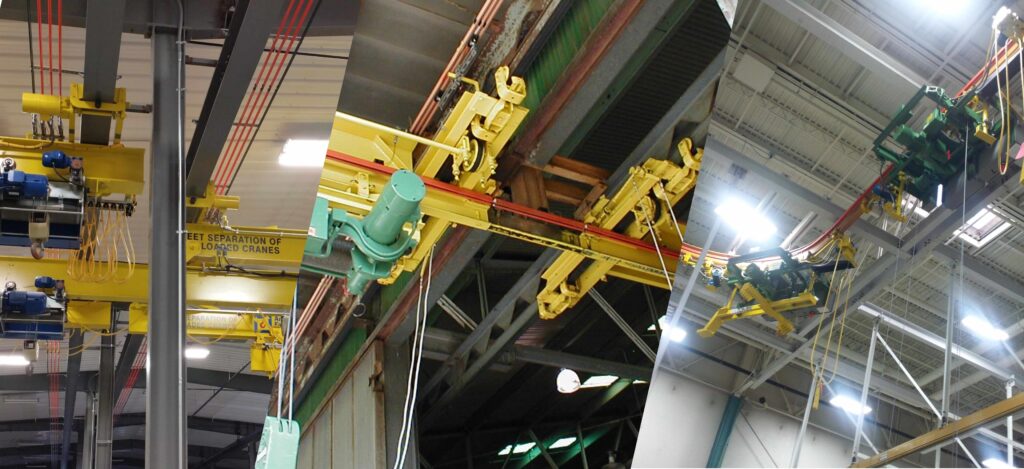
Underhung cranes suspend from the bottom of the runway. They work well for lighter capacities or when structural limitations prevent top-running configurations. In addition, some layouts simplify installation and clearance requirements.
Telescoping Bridge Cranes
Telescoping cranes extend beyond the runway to reach areas that a standard bridge cannot access. As a result, they improve hook coverage without requiring major facility modifications.
Learn more about telescoping crane systems in our guide on telescoping bridge cranes.
Workstation Bridge Cranes
Workstation bridge cranes are designed for lighter loads and repetitive tasks. They improve ergonomics and efficiency, especially in assembly operations and work cells.
These systems are well suited for applications requiring frequent, precise movement within a defined area.
Where Overhead Bridge Crane Selection Goes Wrong
Many overhead bridge crane selection issues stem from an incomplete understanding of the application. For example, teams often focus on capacity and span while overlooking how the system will actually be used.
This can lead to:
- Limited hook coverage or reach issues
- Inefficient workflows and added manual handling
- Systems that do not meet production speed or cycle time requirements
- Safety concerns related to control or visibility
These problems often appear after installation, when changes are more difficult and costly to implement.
Key Factors for Overhead Bridge Crane Selection
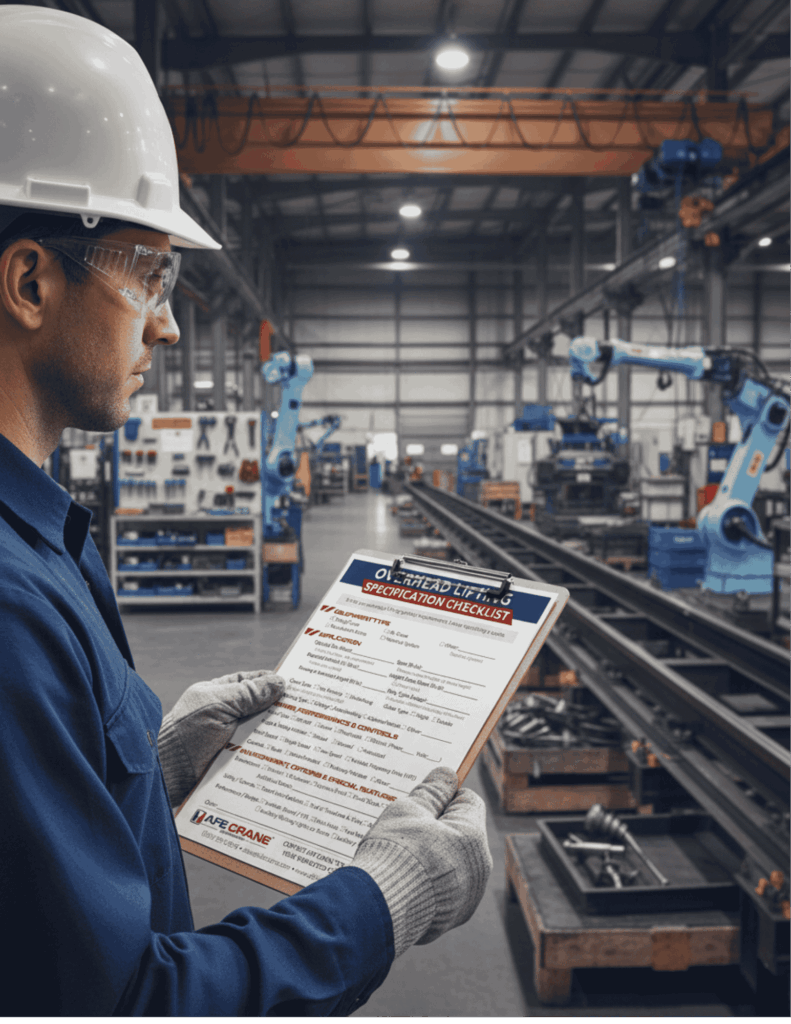
To choose the right system, define these factors early in the process. This step reduces downstream changes.
Application Requirements
Define load weights, frequency of lifts, and how the crane supports production. Clear inputs help engineers determine duty cycle, speeds, and control requirements.
For more on duty classifications, review our article on duty cycle classifications.
Layout and Coverage
Identify where the load needs to move. Consider obstructions, equipment layout, and required hook coverage to avoid gaps in performance.
Building and Structural Integration
Understand how the system will integrate into the facility. This includes runway support, clearances, and attachment points. Early definition helps prevent structural redesign later in the project.
Controls and Operator Interaction
Determine how operators will interact with the system. Control type, speed, and precision requirements all influence system performance.
Compare control approaches in our article on two-speed vs. VFD controls.
Future Flexibility
Consider how the system may need to adapt to future production changes. Planning for flexibility helps avoid costly modifications later.
Engineering for Unique Production Challenges
No two applications are exactly the same. Therefore, teams often adjust standard configurations to meet specific production requirements.
This may include:
- Modifying bridge configurations to improve coverage
- Integrating controls for better precision or coordination
- Designing around building constraints or obstructions
- Incorporating additional safety or automation features
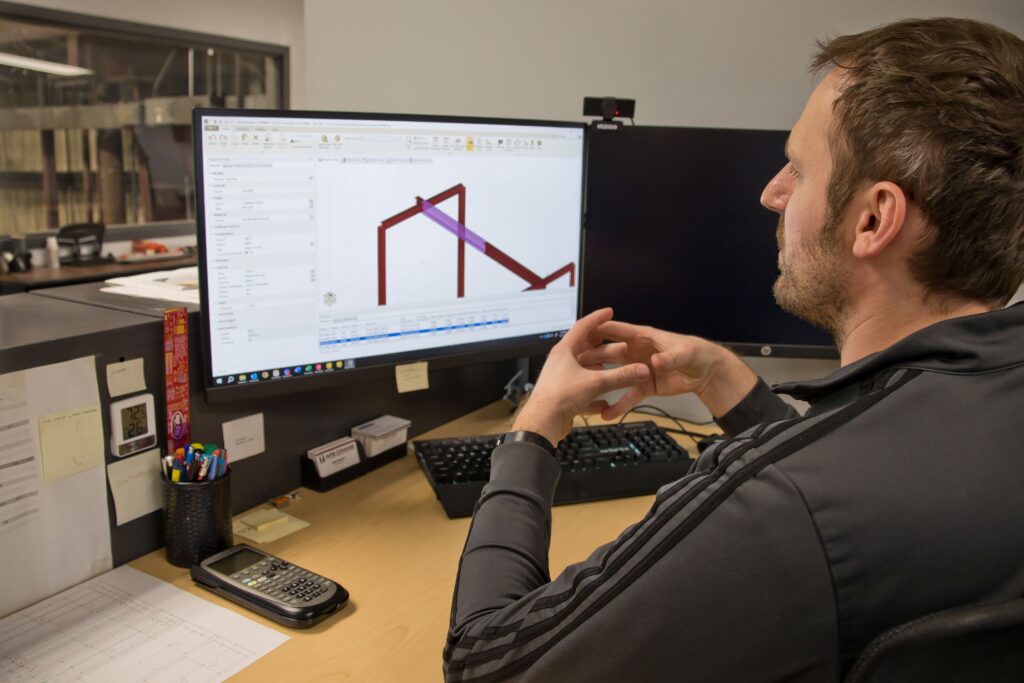
An engineering-driven approach ensures the system supports both current and future operational needs.
Insights from the AFE Crane Engineering Team
In a recent podcast, AFE Crane’s Chief Engineer, Tom Shultz, discusses how different configurations are applied and how engineering solves unique production challenges.
🎧 Listen to the full discussion & if you find the discussion useful, consider sharing it with others on your team who are involved in crane system decisions.
If you find the discussion useful, consider sharing it with others on your team who are involved in crane system decisions.
Choosing the Right System Starts with the Application
Selecting the right overhead bridge crane selection approach requires more than comparing specifications. Instead, you must clearly understand how the system will be used, how it integrates into the facility, and how it supports production goals.
For a broader overview, review our guide on understanding bridge crane basics.
Taking the time to define these factors early helps reduce risk, improve performance, and ensure long-term reliability.
Contact AFE Crane
If you are evaluating overhead bridge crane options, AFE Crane can help review your application and recommend the right configuration.
Contact our team to discuss your project and ensure your system is designed to support your production goals.
About the Author
 Tom Shultz is the Chief Engineer at AFE Crane with over a decade of experience designing overhead lifting solutions. With a background in engineering from Iowa State University, Tom specializes in crane systems that solve complex production challenges. He works closely with customers to evaluate applications, define requirements, and deliver solutions that improve safety, efficiency, and performance. Connect with Tom on LinkedIn.