
Overview
A heavy equipment manufacturer in Iowa needed overhead lifting coverage for machined components moving between a machining center and an adjacent staging area. The machining center sat beneath the primary crane runway. However, operators also needed crane access to load, unload, and stage components in the adjacent bay.
The existing building layout prevented the runway from extending into that area. In addition, a building column stood directly in the path required for the additional hook coverage.
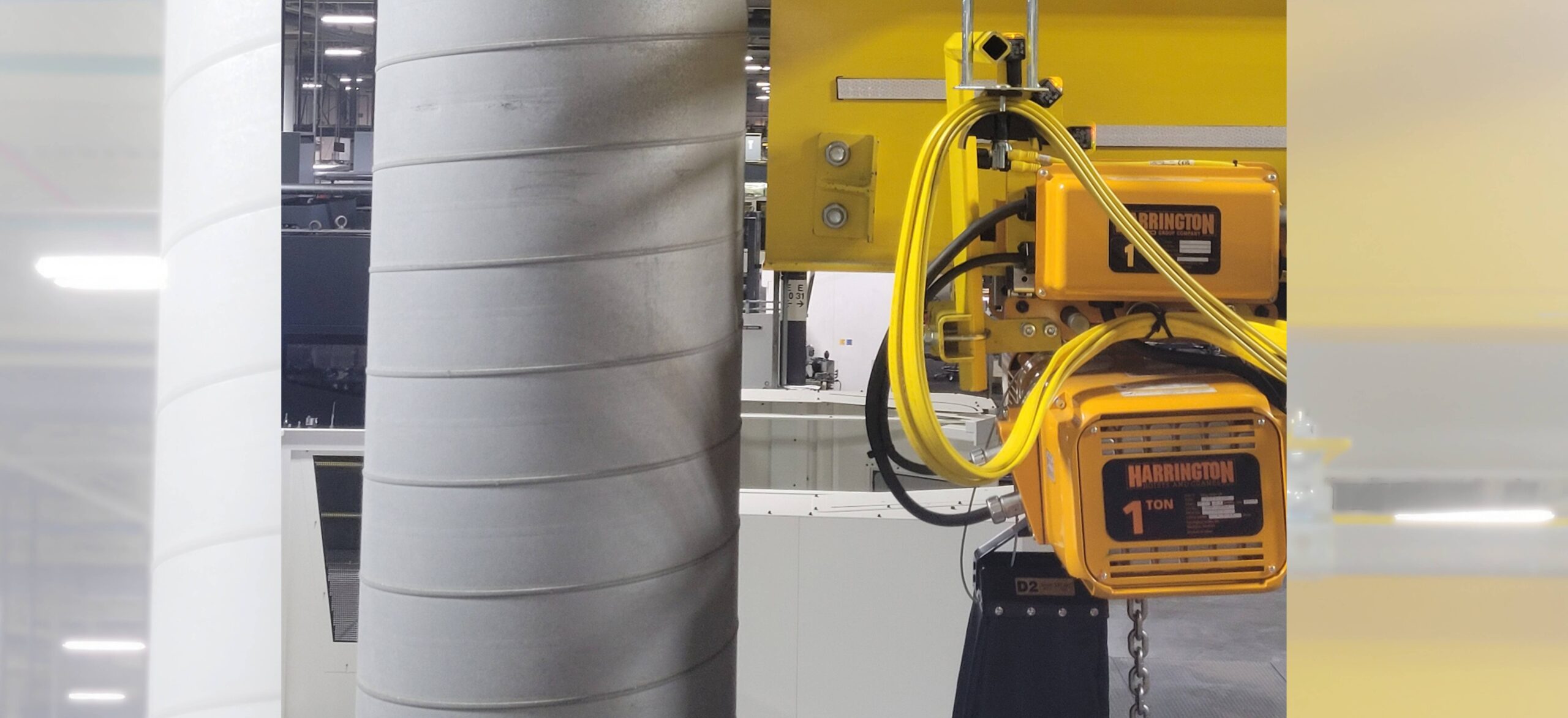
AFE Crane designed a telescoping bridge crane with custom column collision avoidance controls. The telescoping beam provided the additional reach into the adjacent bay, but extending the beam created a potential interference point with the building column. Rather than limiting the crane’s available coverage, AFE Crane developed photo-eye controls and interlocking logic that created a controlled no-fly zone around the obstruction.
Project Challenges
 The primary challenge was providing hook coverage in both bays.
A conventional bridge crane could serve the machining center beneath the runway. However, the building layout prevented the runway from continuing into the adjacent load, unload, and staging area.
A telescoping bridge crane could provide the additional reach. The telescoping beam extended 6 feet, 1 inch beyond the bridge. This placed the hoist centerline 5 feet beyond the runway centerline.
However, the additional reach created another challenge. A building column occupied part of the travel path when the telescoping beam was extended. Therefore, the controls needed to prevent crane movements that could bring the telescoping beam into contact with the column.
Simply restricting crane travel around the entire column area would reduce the available hook coverage. Instead, the control system needed to account for both bridge position and telescoping beam position. This would allow the crane to use the available space when clearance existed.
The AFE Crane Solution
 AFE Crane designed the motorized telescoping bridge crane to extend lifting coverage beyond the normal runway footprint and into the adjacent bay.
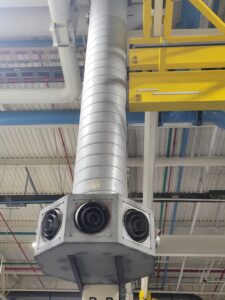
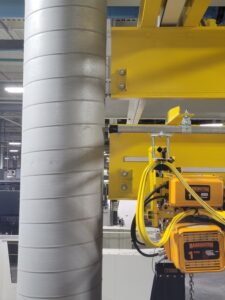
AFE Crane then created a controlled no-fly zone around the building column. Photo eyes mounted on the crane worked with reflectors near the column to identify when the bridge entered the restricted area.
As the bridge approached the column, the controls reduced bridge travel to creep speed approximately 3 feet from the restricted area. At approximately 1 foot, the controls stopped further travel toward the column.
The controls also accounted for the position of the telescoping beam. When the bridge was within the restricted area, the controls prevented the telescoping beam from extending toward the column. Likewise, when the telescoping beam was already extended, the controls prevented bridge travel that could move the beam into the column.
Once the bridge and telescoping beam moved clear of the restricted area, normal movement became available again.
This interlocking logic allowed operators to use the telescoping beam where clearance was available. At the same time, it restricted specific movements that could bring the beam into the building column.
Because multiple cranes operated within the overall system, AFE Crane also incorporated crane-to-crane collision protection. However, the primary control challenge for the telescoping bridge crane was managing its movement around the fixed building column.
Project Execution
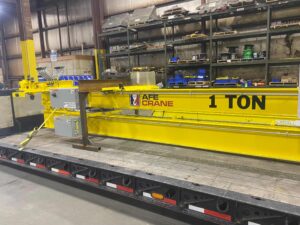 AFE Crane designed the crane controls around the required hook coverage and the existing building obstruction.
The bridge used Magnetek G+ Mini adjustable-frequency controls. Bridge travel was variable from 13 to 80 feet per minute, with programmable acceleration and deceleration.
AFE Crane assembled and tested the bridge crane at its Cedar Falls, Iowa, facility before shipment.
During field installation and startup, the team finalized the photo-eye slowdown and stop positions around the column. The initial control zones provided creep speed at approximately 3 feet and stopped travel at approximately 1 foot.
AFE Crane then adjusted the final positions based on actual installed conditions. This field adjustment was important because it allowed the control zones to account for the physical location of the crane and column rather than relying only on design dimensions. The team could maximize usable hook coverage while maintaining clearance between the telescoping beam and the column.
Conclusion
This project demonstrates how a telescoping bridge crane can provide additional hook coverage when an existing building layout prevents a conventional runway from reaching the entire production area.
In this application, the machining center was located beneath the primary runway. Operators also needed crane access to load, unload, and stage machined components in the adjacent bay. A telescoping beam provided the necessary reach, but an existing building column created an obstruction within part of its potential travel path.
AFE Crane addressed the obstruction with a photo-eye-controlled no-fly zone and interlocking crane controls. The system slowed and stopped bridge travel near the column. It also restricted telescoping beam extension and bridge travel when those movements could bring the beam into the obstruction.
By coordinating the bridge and telescoping beam movements, the crane could use the available hook coverage around the column while restricting movement where adequate clearance was not available.
Learn More About Telescoping Bridge Cranes
Contact AFE Crane
If columns, adjacent bays, or other building obstructions limit the hook coverage of a conventional bridge crane, AFE Crane can help. Our engineering team can evaluate the required lifting points, runway layout, building obstructions, telescoping beam reach, and control requirements.
Whether your application requires a telescoping bridge crane, custom collision avoidance controls, or another engineered lifting system, AFE Crane provides engineering, fabrication, controls integration, installation, startup, and long-term support.
Contact AFE Crane to discuss your next telescoping bridge crane project.