
Overview
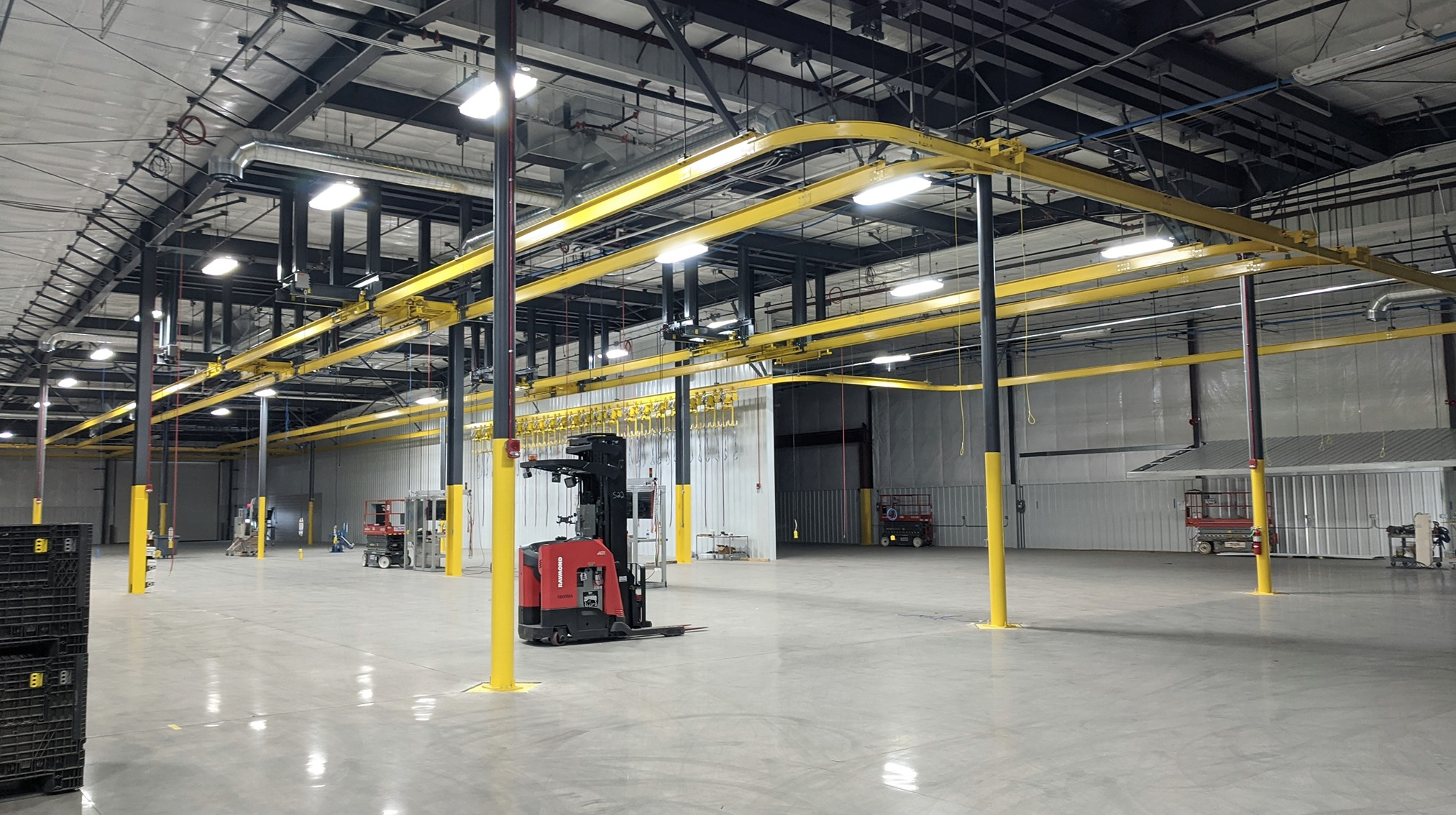
Musco Lighting needed to expand manufacturing capacity at its Muscatine, Iowa, facility. The project would increase production from two lines to four within a 63,000-square-foot building expansion.
The company already used a monorail system that AFE Crane installed in the 1990s. For the expansion, AFE Crane developed a new system based on the same material-handling concept.
The completed system included 1,240 feet of ACCO Louden monorail Supertrack, 20 custom air-operated hoists, 11 switches, and four custom shuttle crane stations. Together, these components created a material-handling path for moving outdoor lighting assemblies through production.
Project Challenges
The new monorail system needed to support a wide range of product sizes. Light stand sections ranged from 3 feet by 5 feet to 22 feet by 10 feet. Their weights ranged from 50 to 500 pounds.
The system also needed to integrate into the building expansion. Therefore, AFE Crane coordinated with Musco Lighting, the architect, and the building manufacturer. This coordination helped ensure the building structure could accommodate the monorail system.
Material flow created another consideration. Operators needed to move products through different workstations without stopping movement along the entire production line. In addition, the system needed to fit the required material-handling paths into the available floor space.
The AFE Crane Solution
AFE Crane designed and installed a 1,240-foot monorail crane system using ACCO Louden Supertrack. The 18-foot-high system covered approximately 24,000 square feet within the expansion area.
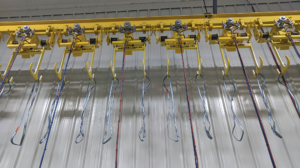 Twenty custom wire rope, air-operated hoists handled the lighting assemblies. Each hoist used double sister hooks that allowed the assemblies to rest within the hooks as they moved through production.
AFE Crane also incorporated 11 monorail switches into the system. The switches allowed operators to route hoist trolleys away from the main line for assembly operations. Meanwhile, other trolleys could continue moving through production.
Four custom shuttle crane stations provided another method of changing the trolley’s path. The shuttle cranes moved hoist trolleys perpendicular to the monorail. As a result, operators could transfer loads between different sections of the production system.
The system also included extended bumpers to protect adjacent loads when fully loaded trolleys operated bumper-to-bumper.
Project Execution
ACCO supplied the monorail components, including the track, curves, switches, hangers, and trolleys. AFE Crane handled the system design and detailing. In addition, AFE designed and constructed the custom shuttle cranes and hoists.
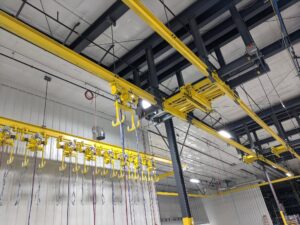 Because the monorail structure integrated with the building, AFE Crane coordinated its work with the other project stakeholders throughout the process. Manufacturing and installation took place over approximately four months.
A two-person AFE Crane crew completed the onsite installation in a few weeks.
AFE Crane also developed the operator controls around the production process. Each workstation included an air-hose pendant. Operators connected the pendant to hoses from the hoist trolley to operate the hoist at that station. Before moving the trolley to the next workstation, they disconnected the pendant.
The shuttle stations incorporated automatic safety baffles. When a shuttle operated, the baffles prevented trolleys from running off the monorail.
Conclusion
This project demonstrates how a custom monorail crane system can become part of the manufacturing process rather than simply provide lifting at a single workstation.
For Musco Lighting, the system connected multiple production areas across approximately 24,000 square feet. Switches and shuttle cranes provided different paths for moving products through the assembly process. Meanwhile, 20 custom air-operated hoists handled lighting assemblies ranging from 50 to 500 pounds.
The project also demonstrates the importance of planning material handling alongside a building expansion. By coordinating the monorail structure with the building design, AFE Crane helped integrate the lifting system into the expanded production area.
Learn More About Monorail Crane Systems Here
Contact AFE Crane
If your manufacturing process requires material to move through multiple workstations or production areas, AFE Crane can help. Our engineering team can evaluate your loads, production flow, facility layout, required lifting points, and building structure to determine a practical material-handling solution.
Whether your application requires a monorail system, specialized hoists, switches, shuttle cranes, or another custom overhead lifting system, AFE Crane provides engineering, equipment integration, installation, startup, and long-term support.
Contact AFE Crane to discuss your next monorail crane system project.