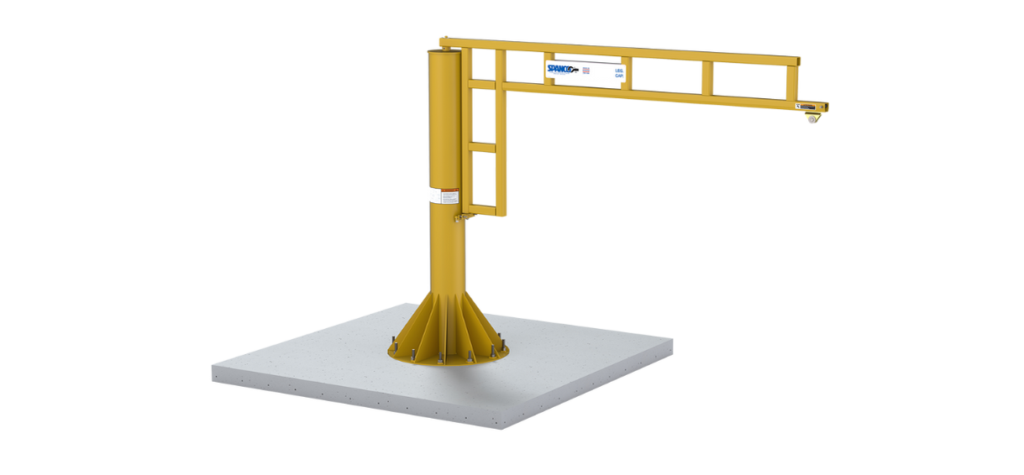
Foundationless Jib Cranes: A Smarter Approach to Material Handling
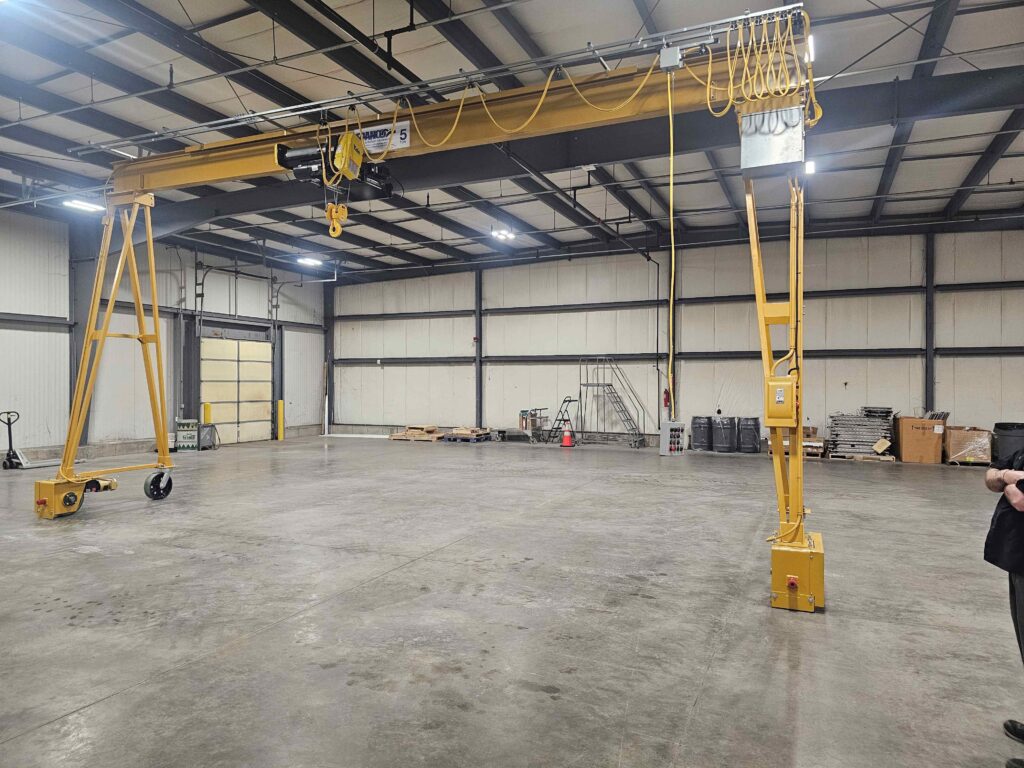
Foundationless jib cranes offer a modern alternative to traditional systems. Instead of requiring dedicated concrete footings, these cranes mount directly to existing reinforced concrete floors.
As a result, installation becomes faster and more flexible. In addition, facilities can avoid major construction work. This makes foundationless jib cranes a practical solution for many operations.
Advantages of Foundationless Jib Cranes
-
Foundationless jib cranes provide several key benefits. First, they reduce overall project costs. By eliminating the need for specialized foundations, companies can avoid a major expense. In many cases, traditional foundations cost as much as the crane itself.
Next, installation happens much faster. Because there is no need for concrete curing, the crane can be installed and used in a fraction of the time. This helps minimize downtime and keep operations moving.
In addition, these cranes offer greater flexibility. Facilities can relocate them more easily as needs change. Therefore, teams can adjust layouts without major disruptions.
Finally, foundationless jib cranes help optimize space. Since they mount directly to the floor, they eliminate large foundation footprints. As a result, more usable floor space remains available.
Spanco’s 605 Series Foundationless Workstation Jib Cranes
A strong example of this design is the Spanco 605 Series Foundationless Workstation Jib Crane. This model supports a range of common applications.
Key specifications include:
-
Capacity: Up to 1,000 lbs
-
Span: 4 to 16 feet
-
Height Under Boom: 8 to 16 feet
-
Boom Rotation: 360 degrees
These cranes bolt directly to reinforced concrete floors, provided the floor meets structural requirements. Because of this design, installation is quick and straightforward.
In addition, operators can relocate the crane if production needs change. This flexibility makes it a strong option for dynamic work environments.
Considerations for Implementation
Although foundationless jib cranes offer many benefits, proper conditions are still required. First, the floor must meet specific structural standards. Typically, this includes at least six-inch-thick, 3,000 PSI reinforced concrete.
Next, consider load capacity. These cranes are best suited for lighter loads, usually up to 1,000 lbs. Therefore, they work well for applications that do not require heavy lifting.
In addition, think about how the crane will be used. Foundationless jib cranes perform best in localized areas. For example, they are ideal for individual workstations or specific sections of a production line.
Conclusion
Foundationless jib cranes provide a flexible and cost-effective lifting solution. By removing the need for dedicated foundations, they simplify installation and reduce project costs.
In addition, they allow facilities to adapt quickly to changing layouts. This improves both efficiency and space utilization.
If you are considering a jib crane solution, the AFE Crane team can help. We will work with you to select a system that fits your application, space, and long-term goals.
About the Author

Emily Carrier is the Applications Engineering Manager at AFE Crane. She holds a Bachelor of Science in Mechanical Engineering from Iowa State University and brings over 15 years of manufacturing experience. Emily works closely with customers to develop practical, engineered overhead lifting solutions that improve safety, efficiency, and long-term equipment performance. Connect with Emily on LinkedIn.