Introduction
OSHA 1910.179 is the primary federal regulation governing overhead and gantry cranes in general industry. Manufacturers, plant managers, engineers, and safety professionals rely on this standard to maintain a safe work environment and avoid costly citations or downtime.
Specifically, OSHA 1910.179 defines requirements for crane design, rated capacity markings, inspections, testing, maintenance, and safe operation. Although the language is technical, the objective is clear: reduce risk and protect employees who work around overhead lifting equipment.
This practical guide explains OSHA 1910.179 for overhead cranes and outlines what compliance looks like in real-world applications.
For the full regulatory text, review the official OSHA 1910.179 Standard.

What OSHA 1910.179 Covers for Overhead Cranes
OSHA 1910.179 applies to overhead and gantry cranes, including bridge cranes, semi-gantry cranes, cantilever gantry cranes, wall cranes, and storage bridge cranes equipped with a top-running trolley and hoist.
Under the standard, a crane is defined as a machine that lifts and lowers a load while also moving it horizontally, with the hoisting mechanism as an integral part of the machine. Therefore, facilities operating overhead bridge cranes should treat OSHA 1910.179 as the foundational compliance document for their systems.
If you operate bridge crane systems, ensuring alignment with OSHA 1910.179 is not optional—it is a federal requirement.
OSHA 1910.179 Rated Load Marking Requirements
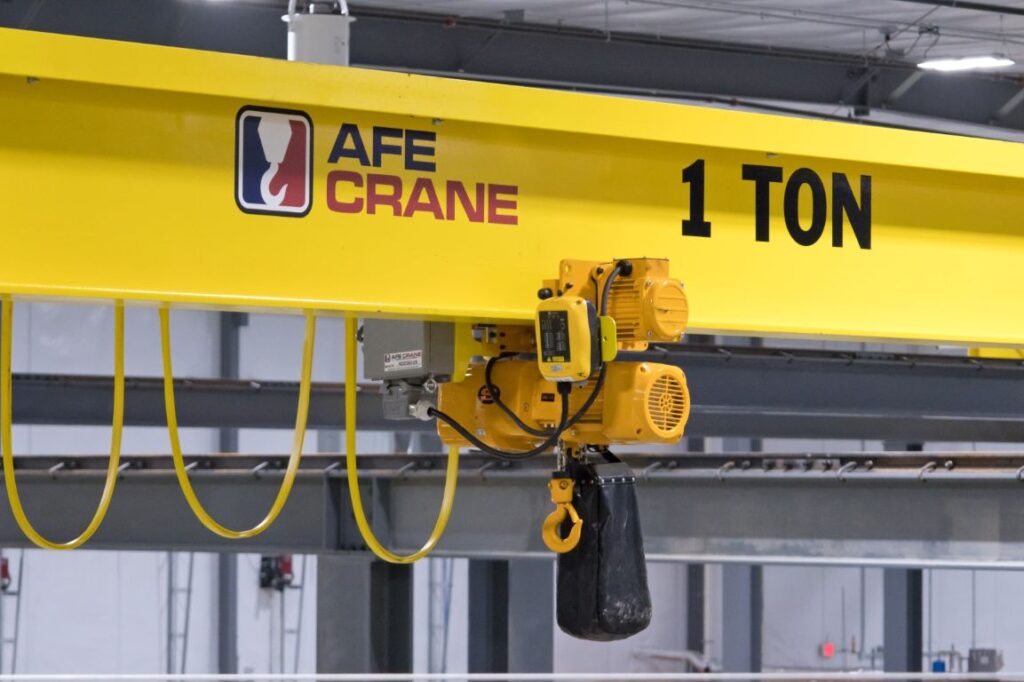
One of the most visible OSHA 1910.179 overhead crane requirements involves rated load markings. The maximum rated load must be clearly marked on each side of the crane. Additionally, if multiple hoists are installed, each hoist must display its rated capacity.
Clear capacity markings allow operators and supervisors to verify the safe working load quickly. In practice, missing or illegible markings remain one of the most common OSHA citation triggers.
If you modify or re-rate a crane, you must update the displayed capacity and maintain documentation supporting the engineering review.
OSHA 1910.179 Design and Structural Requirements
OSHA 1910.179 references nationally recognized consensus standards for crane design. Modern systems are typically engineered according to CMAA specifications and ASME standards.
If you alter, repair, or re-rate a crane, you must evaluate the modification. Engineering review confirms that structural members, bridge girders, end trucks, hoist systems, brakes, and runway structures can safely handle the revised loading conditions.
As production demands increase, structural analysis becomes even more critical. Without proper evaluation, facilities risk overstressing crane components or runway systems.
For additional design guidance, review the Crane Manufacturers Association of America (CMAA) specifications.
OSHA 1910.179 Safety Devices and Operational Controls
OSHA 1910.179 requires specific safety devices and control protections, including:
• Hoist holding brakes
• Upper limit switches
• Bumpers and end stops
• Guards for exposed moving parts
• Properly protected electrical conductors
Together, these components help reduce the risk of uncontrolled movement, mechanical failure, or operator injury. Routine verification of these safety systems is an important part of maintaining compliance.
One requirement that is often overlooked involves warning labels on control devices, such as pendants and remote transmitters. These labels must include cautionary information, including warnings not to lift more than the rated load. Although they may seem minor, these labels are required under the standard. If they are missing, damaged, or unreadable, they can result in citations during an OSHA inspection.
Additionally, the standard requires cranes to be operated by designated personnel. Employers must define who is authorized to operate the crane and ensure appropriate training is provided.
OSHA 1910.179 Inspection and Maintenance Requirements
Inspection and maintenance form the backbone of OSHA 1910.179 overhead crane compliance. The regulation requires regular inspections of operating mechanisms, safety devices, hooks, wire ropes, brakes, and electrical systems.
Generally, inspections fall into two categories:
Frequent inspections involve visual and functional checks performed daily to monthly, depending on service conditions.
Periodic inspections involve more comprehensive evaluations conducted at defined intervals based on crane usage and severity of service.
Clear documentation demonstrates compliance during OSHA audits. Therefore, facilities should retain inspection records, repair reports, and load testing documentation in an organized manner.
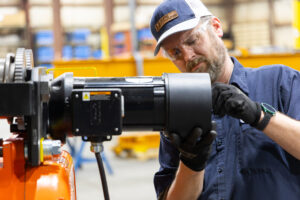
For facilities seeking structured support, explore AFE Crane’s inspection and maintenance services.
OSHA 1910.179 Load Testing Requirements
Before initial use, and after certain alterations, OSHA 1910.179 requires load testing to verify structural strength and mechanical reliability. OSHA interpretations commonly reference testing up to 125% of rated load unless the manufacturer specifies otherwise.
Qualified personnel must conduct load tests under controlled conditions. Proper documentation confirms that hoists, brakes, structural members, and controls perform as intended.
Clearance and Safe Operating Conditions Under OSHA 1910.179
OSHA 1910.179 specifies minimum clearance requirements to prevent collisions with building structures or adjacent equipment. Maintaining proper runway alignment, adequate hook approach clearances, and unobstructed travel paths prevents mechanical damage and unsafe conditions.
Additionally, operators should avoid side loading, sudden starts, and abrupt stops. These practices not only support compliance but also extend equipment life.
Why Partnering With a Crane Expert Strengthens OSHA Compliance
It is also important to understand that OSHA regulations are not the only governing requirements for overhead cranes. While 29 CFR 1910.179 applies specifically to top running bridge cranes and gantry cranes, additional comprehensive standards published by ANSI, ASME (including the ASME B30 series), and CMAA provide broader guidance that covers all crane types — including underhung bridge cranes, monorails, and underhung hoists. These consensus standards address equipment configurations and technical considerations that may not fall directly within OSHA’s scope. For this reason, crane design, inspection, and maintenance programs should evaluate compliance against all applicable standards — not solely OSHA.
AFE Crane designs, manufactures, and inspects crane systems with consideration for all relevant safety standards, including OSHA, ANSI, ASME, CMAA, and applicable OEM requirements. Taking a comprehensive standards-based approach helps ensure equipment is evaluated appropriately for its specific type, configuration, and operating environment.
Download the OSHA 1910.179 Compliance Checklist
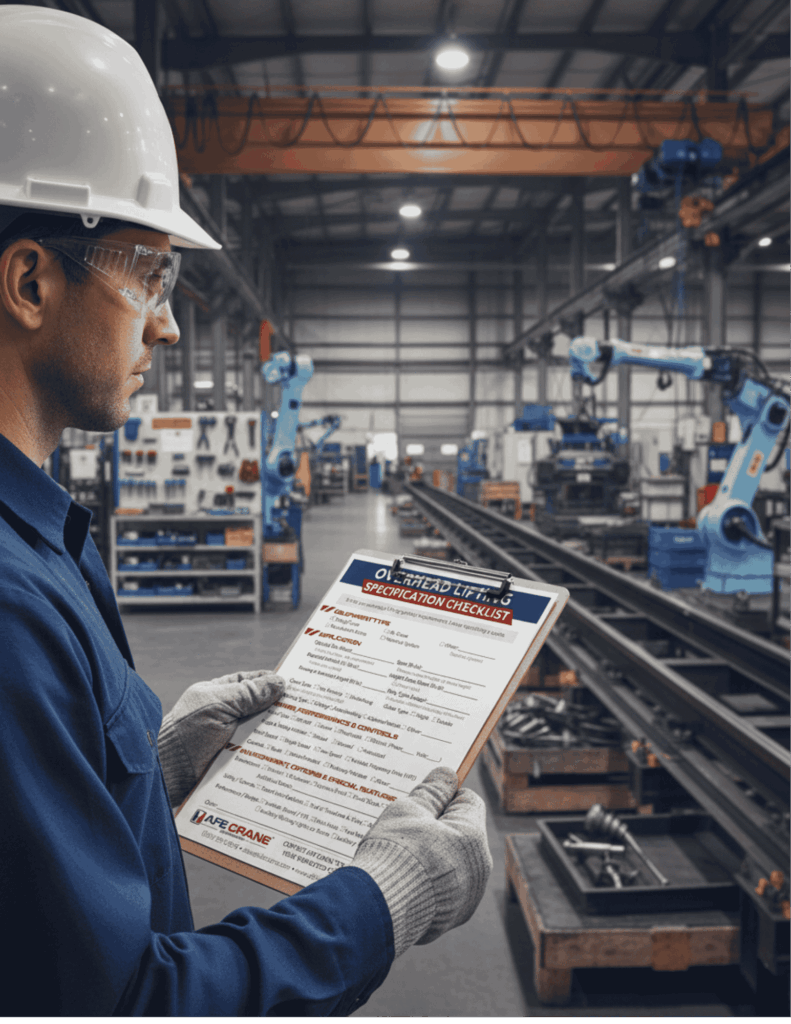
To support your internal review process, AFE Crane has developed a practical OSHA 1910.179 Overhead Crane Compliance Checklist. This downloadable resource helps maintenance teams, engineers, and safety professionals quickly assess alignment with key regulatory requirements.
Use the checklist to:
• Review rated load markings and documentation
• Evaluate inspection and maintenance practices
• Confirm safety device functionality
• Identify potential compliance gaps before an OSHA audit
Download the OSHA 1910.179 Overhead Crane Compliance Checklist →
Conclusion
OSHA 1910.179 remains the cornerstone of overhead crane safety in general industry. By understanding its requirements for rated load markings, safety devices, inspections, load testing, and structural evaluation, facilities can create safer work environments and avoid costly disruptions.
A structured compliance strategy protects employees, strengthens operational continuity, and extends equipment life.
For organizations seeking a deeper evaluation of their crane systems, consulting with experienced crane engineering professionals can help ensure alignment with OSHA 1910.179 for overhead cranes and long-term performance goals.
About the Author

Emily Carrier is the Applications Engineering Manager at AFE Crane. She holds a Bachelor of Science in Mechanical Engineering from Iowa State University and brings over 15 years of manufacturing experience. Emily works closely with customers to develop practical, engineered overhead lifting solutions that improve safety, efficiency, and long-term equipment performance. Connect with Emily on LinkedIn.